
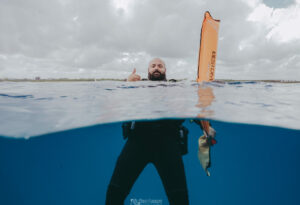
Planning a dive trip to Mexico isn’t just about booking a hotel and choosing a dive center. That’s part of it, but not all of it!
Mexico offers very different experiences depending on the region: the warm, turquoise Caribbean Sea, the drift dives of Cozumel, and above all the cenotes, which are unique in the world.
To get the most out of your stay, you need to think like a diver: plan around the season, your program, your level and your gear, and organize the logistics so that everything runs smoothly once you’re there.
1) Choose What You Really Want to Do
Before looking at prices or dive sites, you need to know exactly what you want to do.
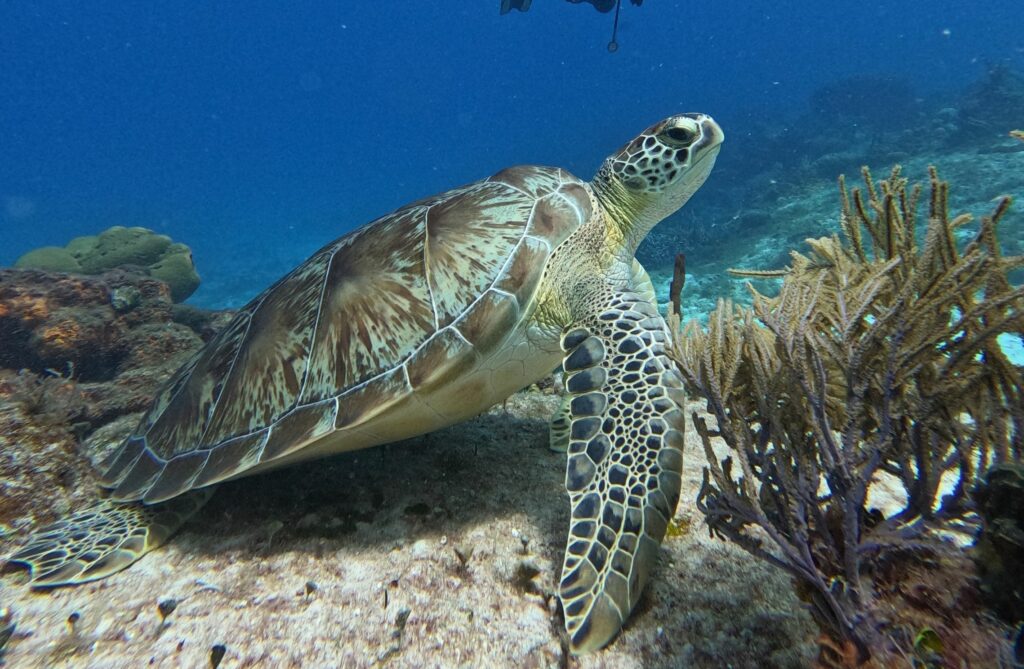
Do you want to discover the Caribbean in the ocean, with reefs and tropical marine life? Do you want to explore the many wrecks? Or discover the cenotes, with their incredible beams of light?
Or do you want a mix of all of that, which is often the best choice for a first trip to Mexico?
2) What You Can Do Depending on Your Certification Level
Let’s be honest, your level plays a big role in your dive plan. A diver with no training won’t be able to discover as much of what the Riviera Maya has to offer as a Divemaster.
Open Water
With an Open Water certification, you can do lots of dives in Mexico: Dos Ojos and Chac Mool, which are among the best cenote dives, Car Wash, Jardín del Edén (Ponderosa), as well as ocean dives in Playa del Carmen and Cozumel.
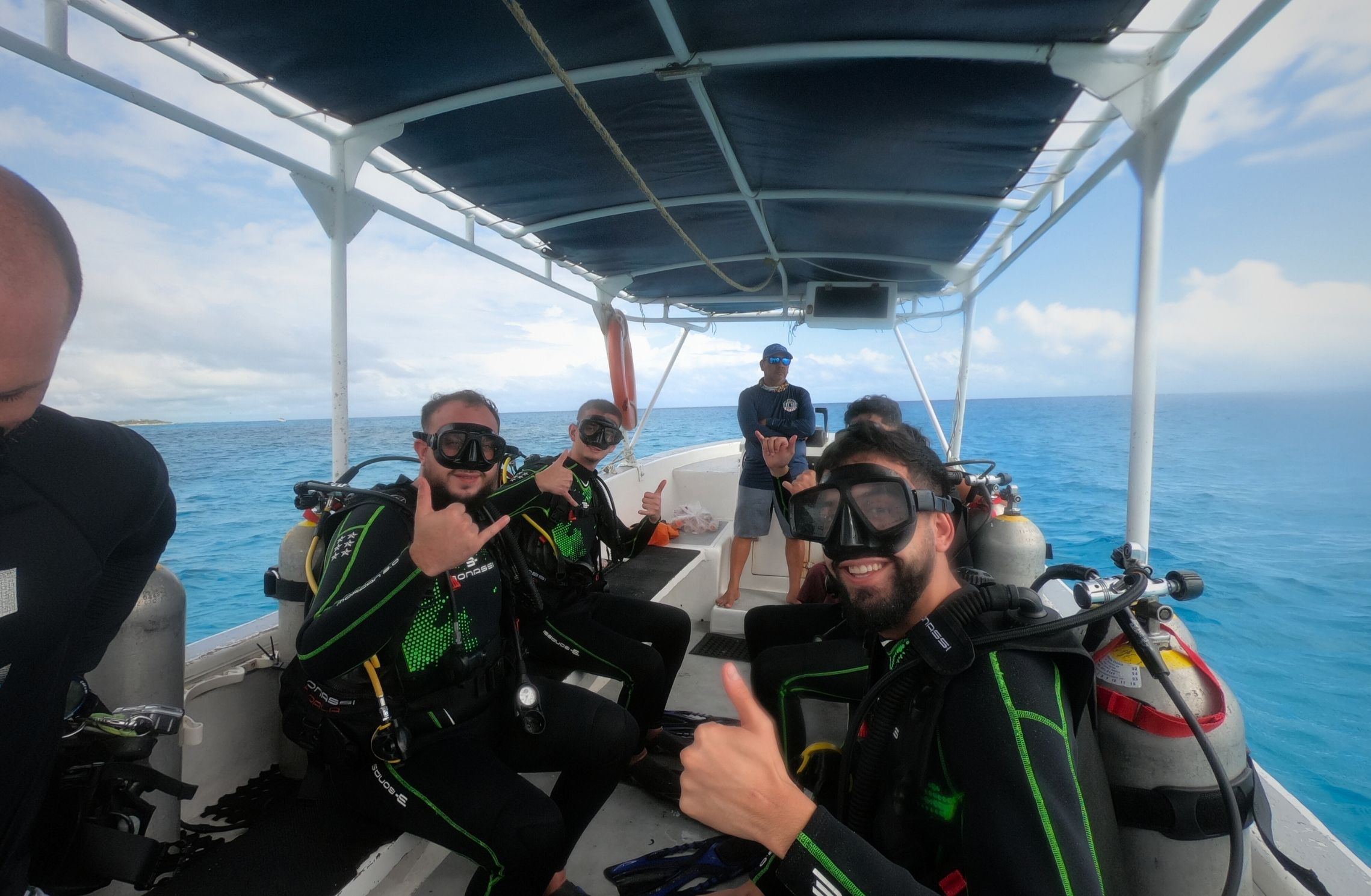
And if you have about 20 logged dives, you can also join more specific trips like the bull sharks (in season) and some wrecks, depending on conditions and supervision.
Discover what you can do with an Open Water certification in MexicoAdvanced Open Water
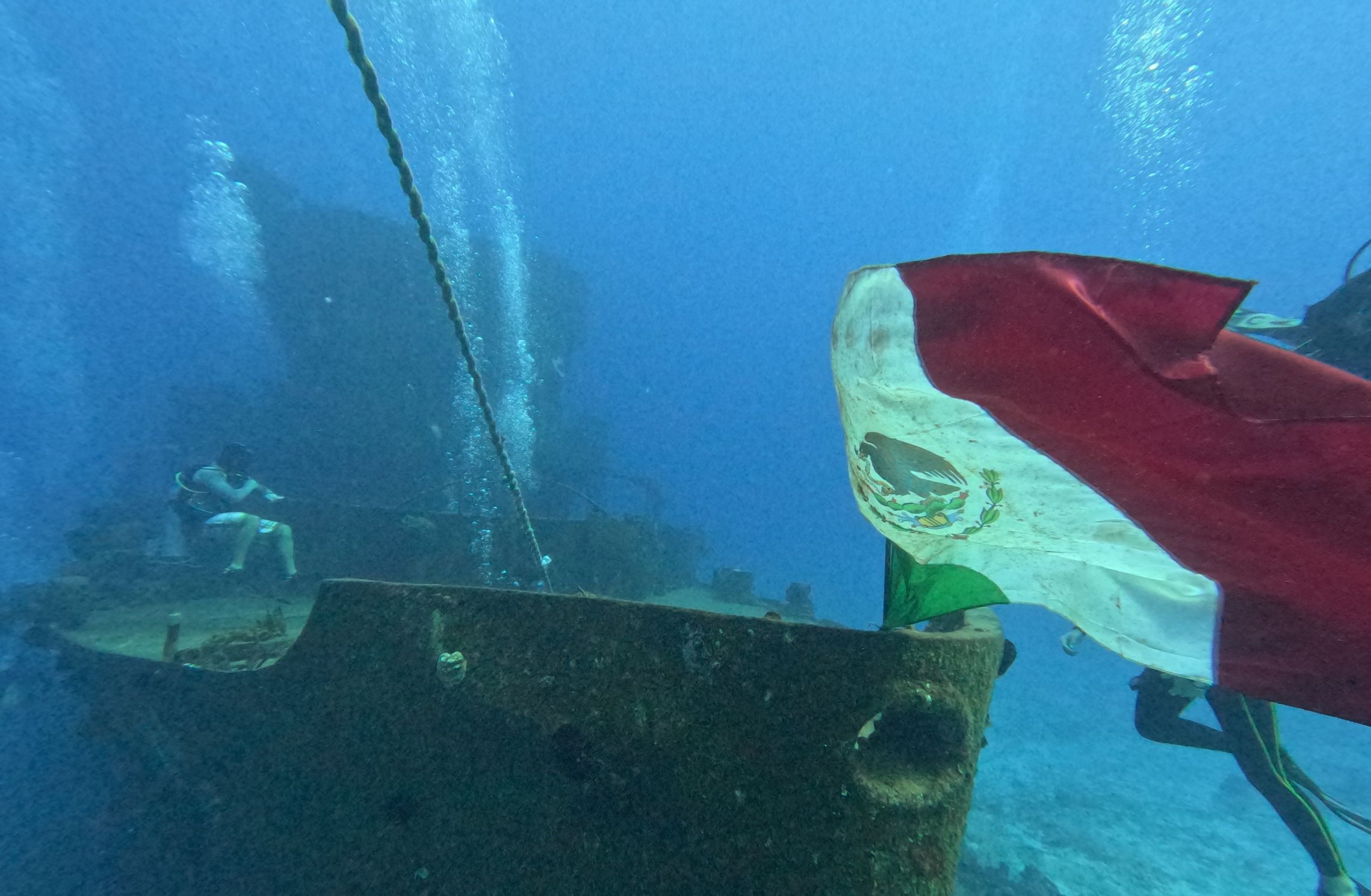
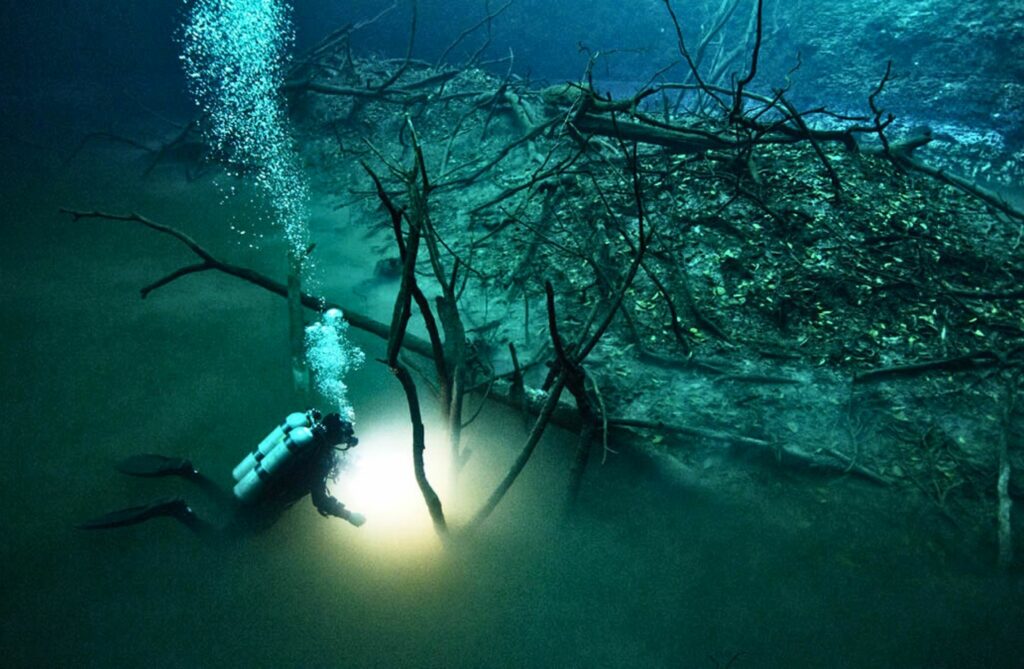
With an Advanced Open Water certification, you can access more technical cenotes like Angelita and The Pit, as well as iconic wreck dives like the C-53 in Cozumel and the C-56 in Puerto Morelos.
This level also lets you join the bull shark dive (in season), depending on conditions and supervision.
Discover what you can do with an Advanced Open Water certification in MexicoRescue Diver and Above
With a Rescue Diver certification or higher, you can access more demanding cenotes like Cenote Zapote and Cenote Dreamgate.
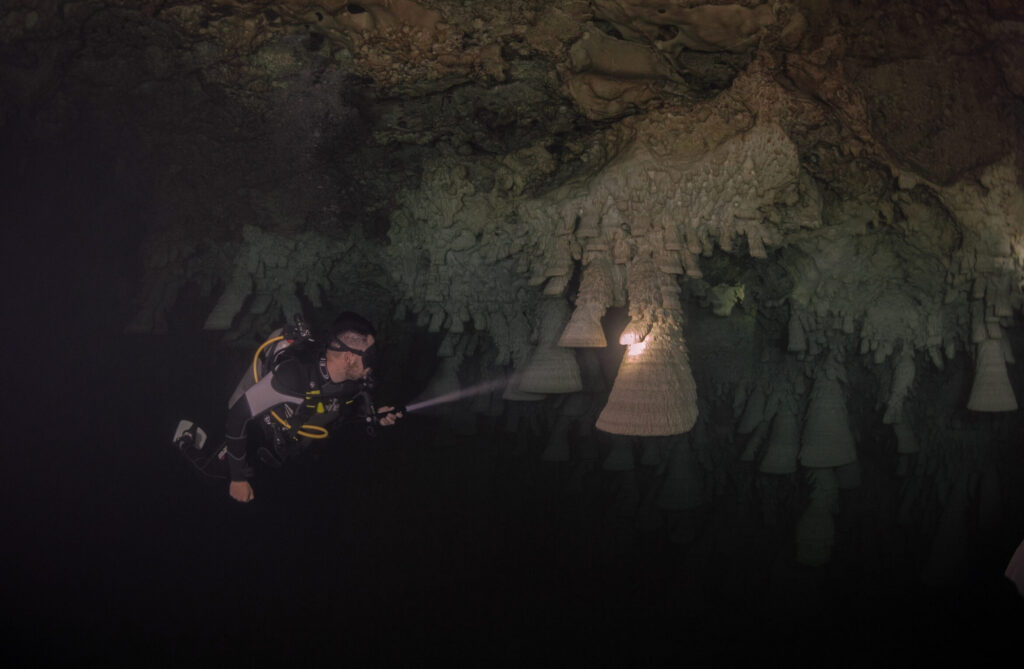
These dives usually require more comfort in the water, good buoyancy control and a real sense of procedure.
And if you haven’t dived in a long time, you can always do a refresher at the start of your stay. You’ll get your reflexes back, feel more comfortable, and it improves the whole trip.
3) When to Come Diving: The Best Seasons for What You Want to Do
Whatever the time of year, you can dive all year round in the Riviera Maya, Mexico, but the season has a huge influence on what you can do.
Here are the best times to come diving, depending on the trip:
Bull Sharks
To see bull sharks, the most reliable period is usually from mid-November to mid-February, with sightings often at their best in December and January.
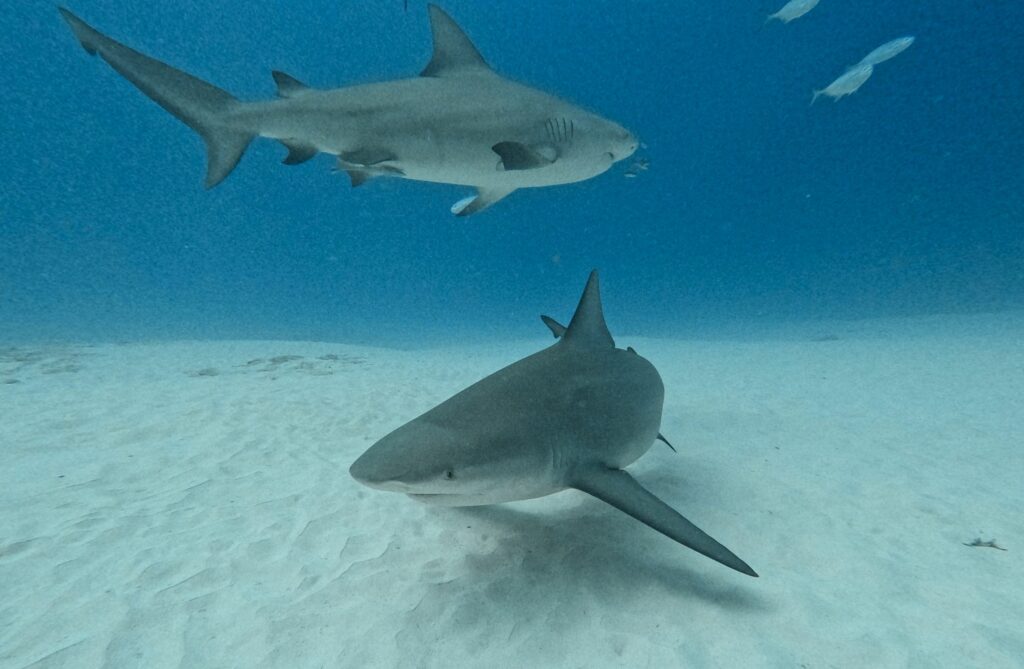
This is the season when the females return to the region during their migration, probably to rest and give birth. This regularity explains why encounters offshore are very frequent during this period.
Discover bull shark divingCenote Chac Mool
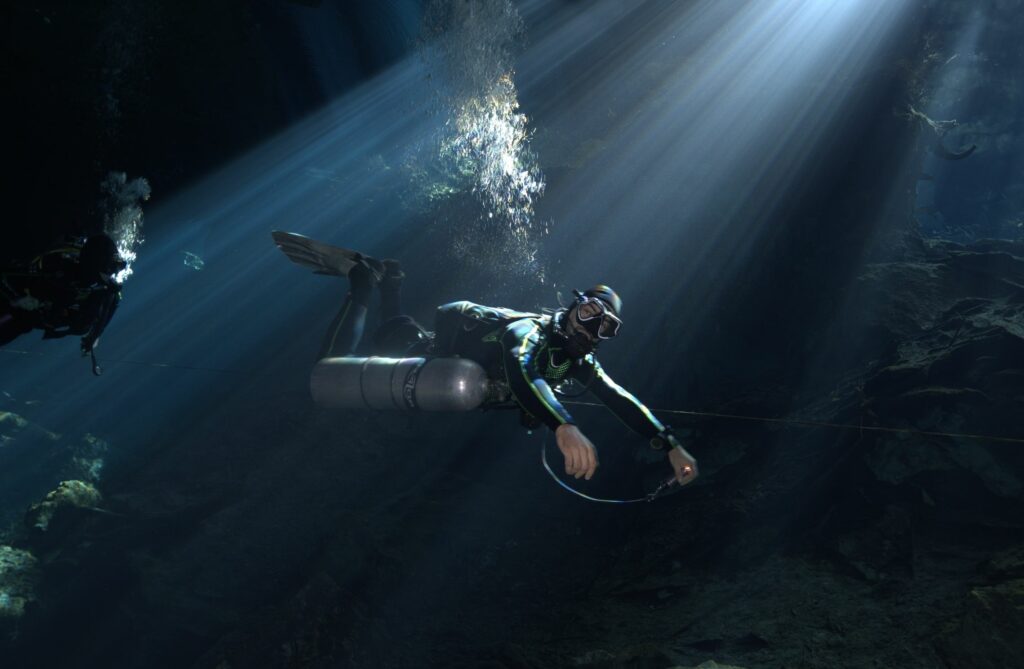
In winter, the lower position of the sun changes the way light enters the cenotes. At Cenote Chac Mool, this lets the rays reach deeper into the passages, creating impressive plays of light and a unique atmosphere.
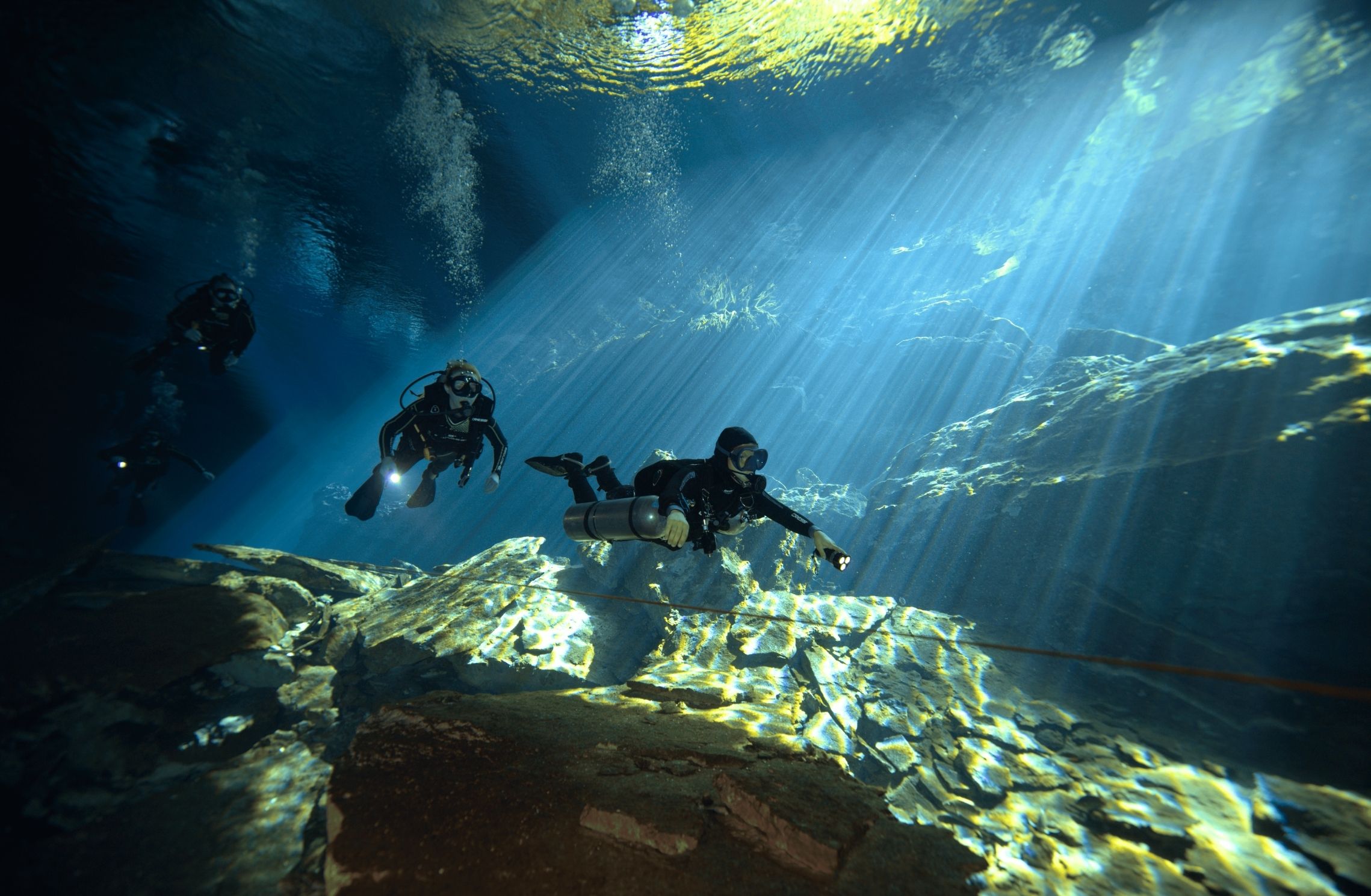
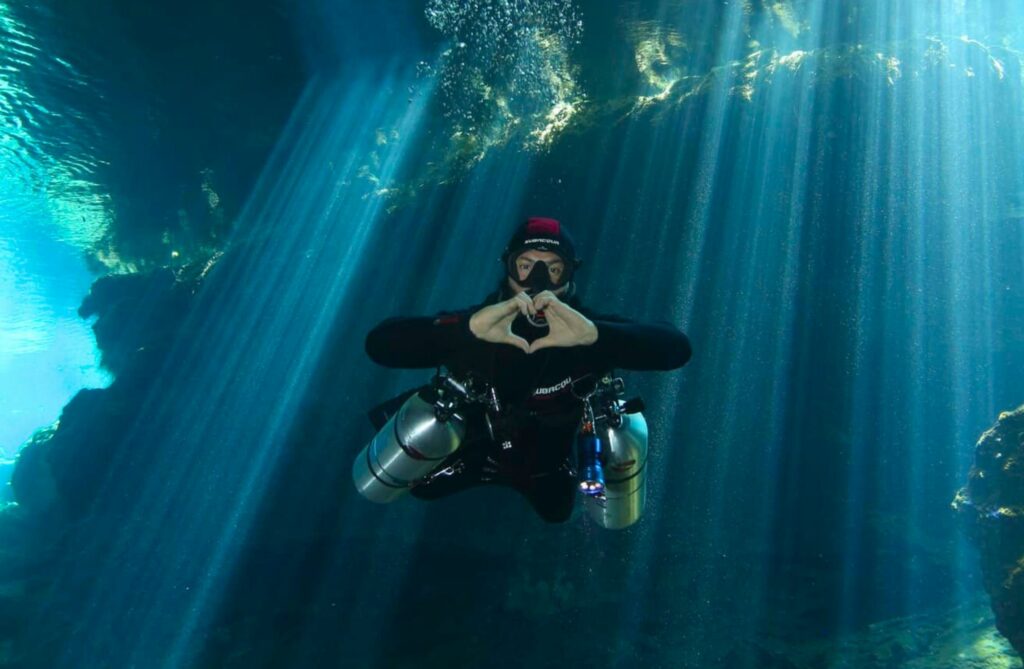
These conditions make winter an ideal time for underwater photography, with especially strong contrasts and beams of light.
Discover Cenote Chac MoolCenote The Pit
On the other hand, in summer, when the sun is higher and almost straight overhead, it’s the perfect season for cenotes like Cenote The Pit.
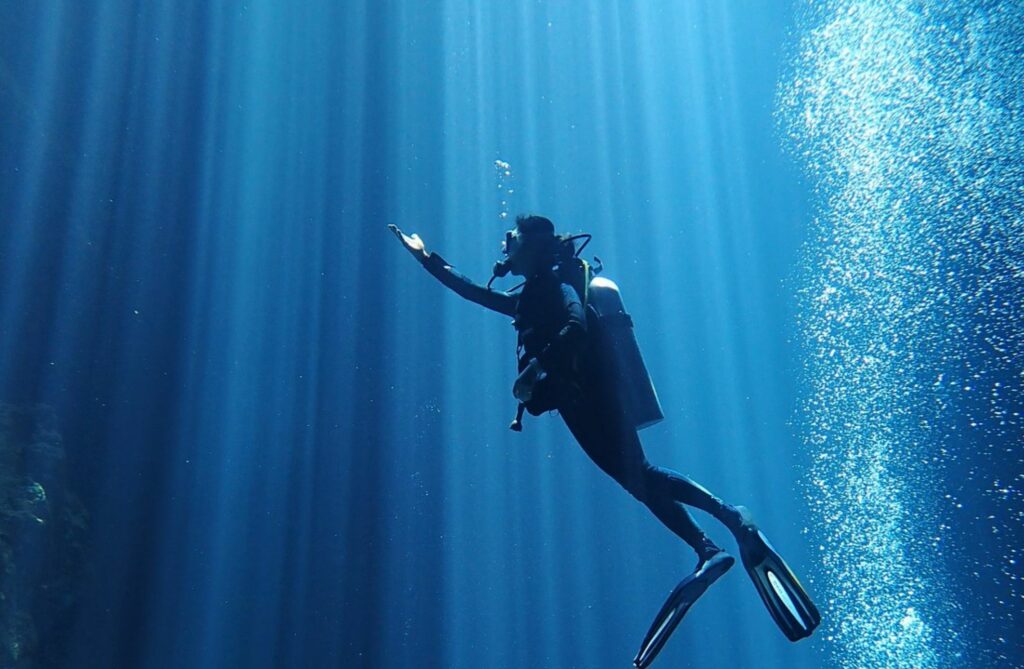
The light then shines straight down with incredible intensity, passes through the crystal-clear water to the depths and highlights the full beauty of the halocline, with those famous columns of light that make the dive truly spectacular.
Discover Cenote The Pit!Most Open Cenotes
Summer is also the season when the cenotes take on incredible colors. With the heat, humidity and rain, more leaves break down in the open cenotes, especially at Car Wash or Casa Cenote.
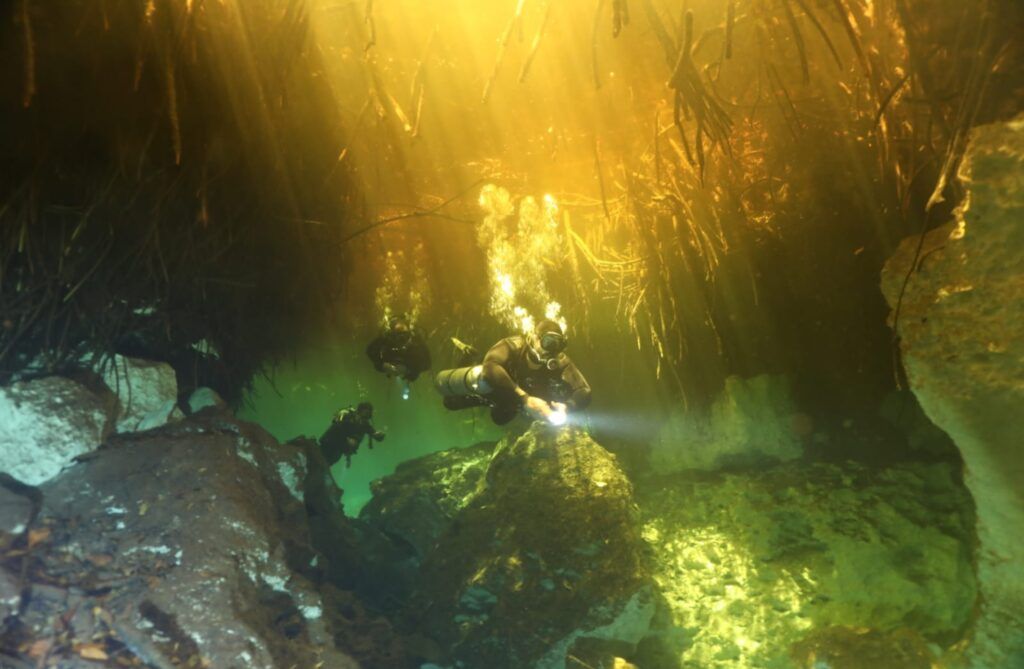
A thin layer rich in tannins often forms on the surface, about 3 ft (1 m) deep. Warmed by the sun, it creates unique reflections and gradients of yellow, orange and green. A natural show that changes with the light and the time of day.
4) Build a Realistic Plan (Without Burning Out)
The most common mistake is wanting to do everything, too fast. A successful dive trip isn’t a marathon.
Ideally, alternate more active dive days with lighter days. Also leave some room in your schedule: there can be wind, rough seas or a change of plan, and that’s where a good dive center makes all the difference.
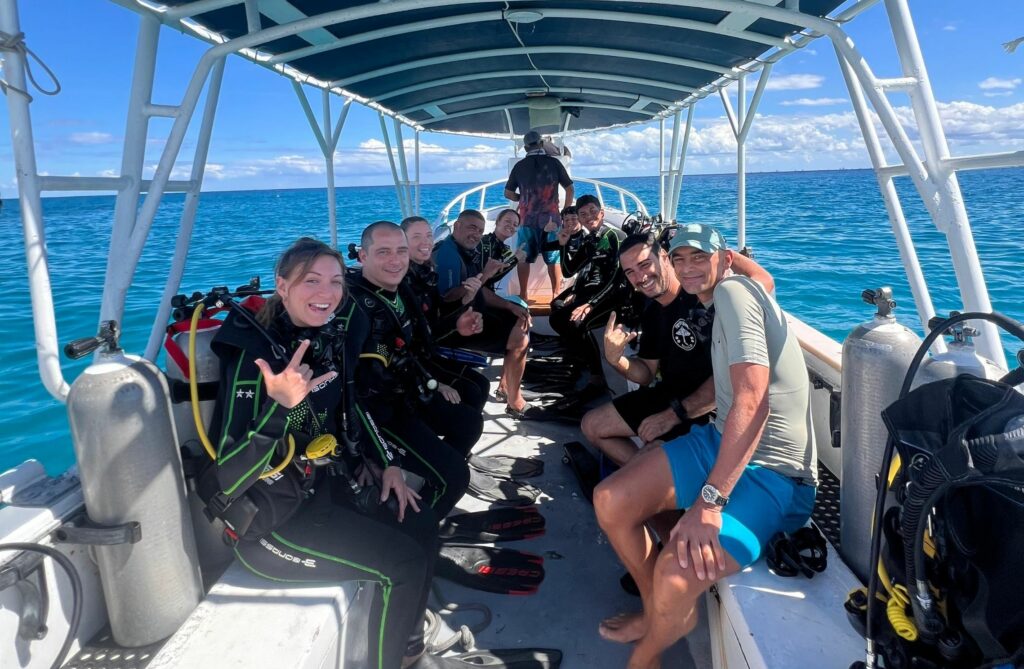
A simple 10-day itinerary can work very well: a few ocean dives, one or two days in the cenotes, a day off, then back to the ocean. You can even add more dives if you loved the cenotes.
And above all, don’t schedule a big dive day right before your flight.
5) Budget and Logistics: How Much It Costs and How to Keep It Simple
The budget for a dive trip to Mexico depends mostly on your program.
Here is a price grid for reference:
| Type of dive | Price (2 dives) |
|---|---|
| Ocean dives | 2,600 MXN (Playa del Carmen) to 4,100 MXN (Cozumel), about US$140 to 220 |
| Cenote dives | 3,400 to 4,000 MXN (about US$185 to 215) |
| Wreck dives | 2,600 MXN (Mama Viña, Playa del Carmen) to 4,100 MXN (C-53, Cozumel), about US$140 to 220 |
| Bull shark dives | 3,400 MXN (about US$185) |
When it comes to logistics, everything can be very simple if you choose a central base like Playa del Carmen: the cenotes are nearby, the dive centers are all right there, and Cozumel is just across the water. But if you change towns every 2 days, it can quickly become tiring.
6) Choosing a Serious Dive Center: The Criteria That Really Matter
The dive center is what makes the difference between an “okay” trip and a safe one.
A good center keeps groups small and reasonable, and doesn’t push you beyond what you’re comfortable with. Gear matters too, but what matters most is supervision and safety.
Choose a center whose guides speak your language. You’ll understand the briefing, the instructions and the details of the site better, and that changes everything, especially in cenotes.
And above all, a good center knows how to handle the unexpected. If the port closes because of wind or rough seas, it will try to offer you a plan B instead of canceling without a solution.
Book your dive with Triton Diving!Conclusion
Mexico can be an incredible dive trip if you plan it well.
Know what you want to do, choose the right season, base yourself in the right place, make a realistic plan and choose a serious dive center.
That way, you’ll make the most of the reefs and cenotes and travel stress-free.