
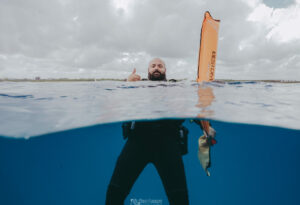
Mexico is an ideal destination for discovering sharks, with different species to see depending on the region and the time of year!
From the impressive whale sharks, completely harmless to humans, to the bull sharks you can meet while diving in Playa del Carmen, the Riviera Maya is a true paradise for marine life lovers!
You’ll also come across the peaceful nurse shark and the Caribbean reef shark, while other species like the silky shark or the great white shark live mostly on the Pacific side.
In this article, you’ll find everything you need to know about sharks in Mexico: where to see them, in which season, and whether or not they’re dangerous!
The Nurse Shark
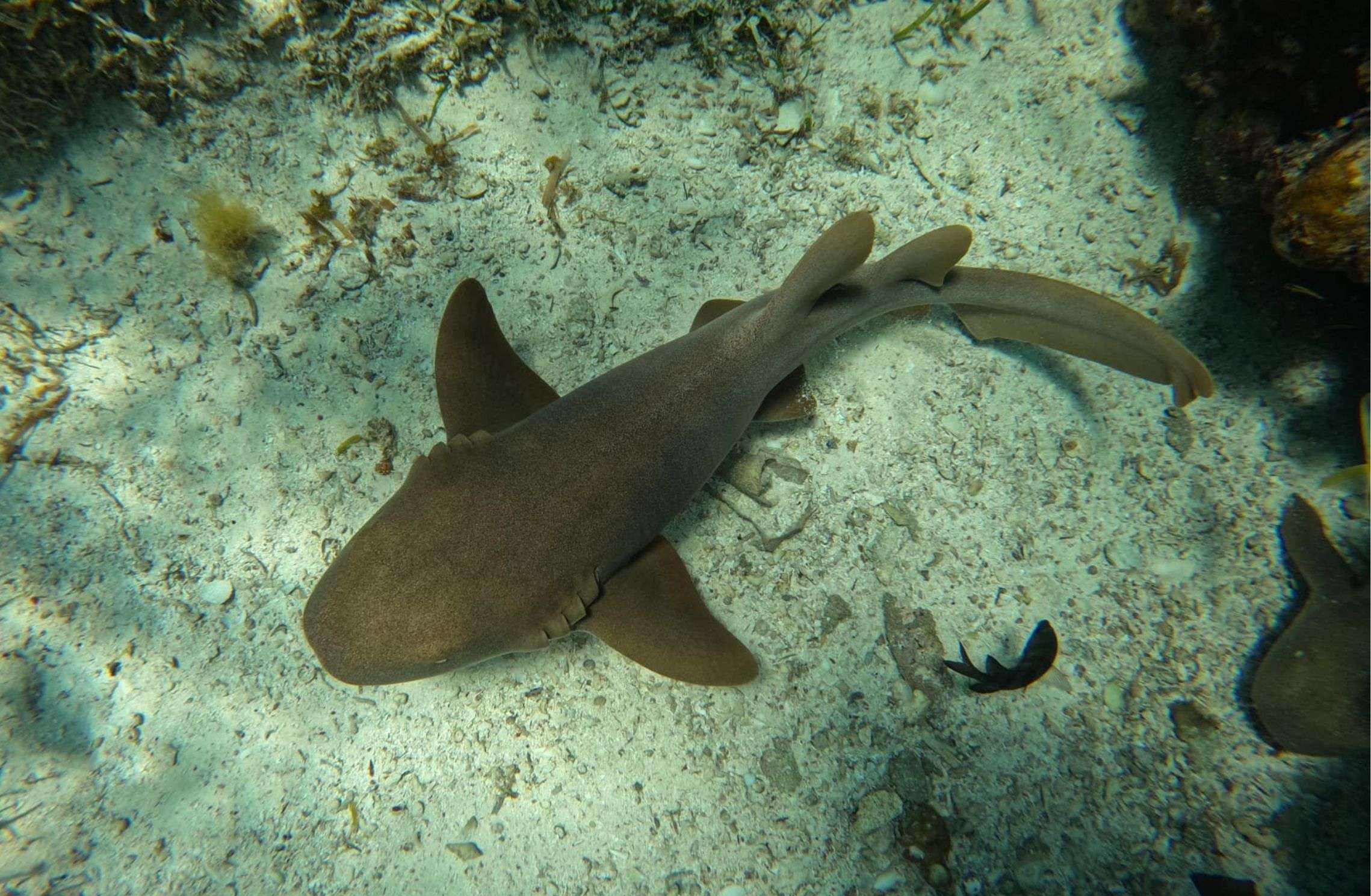
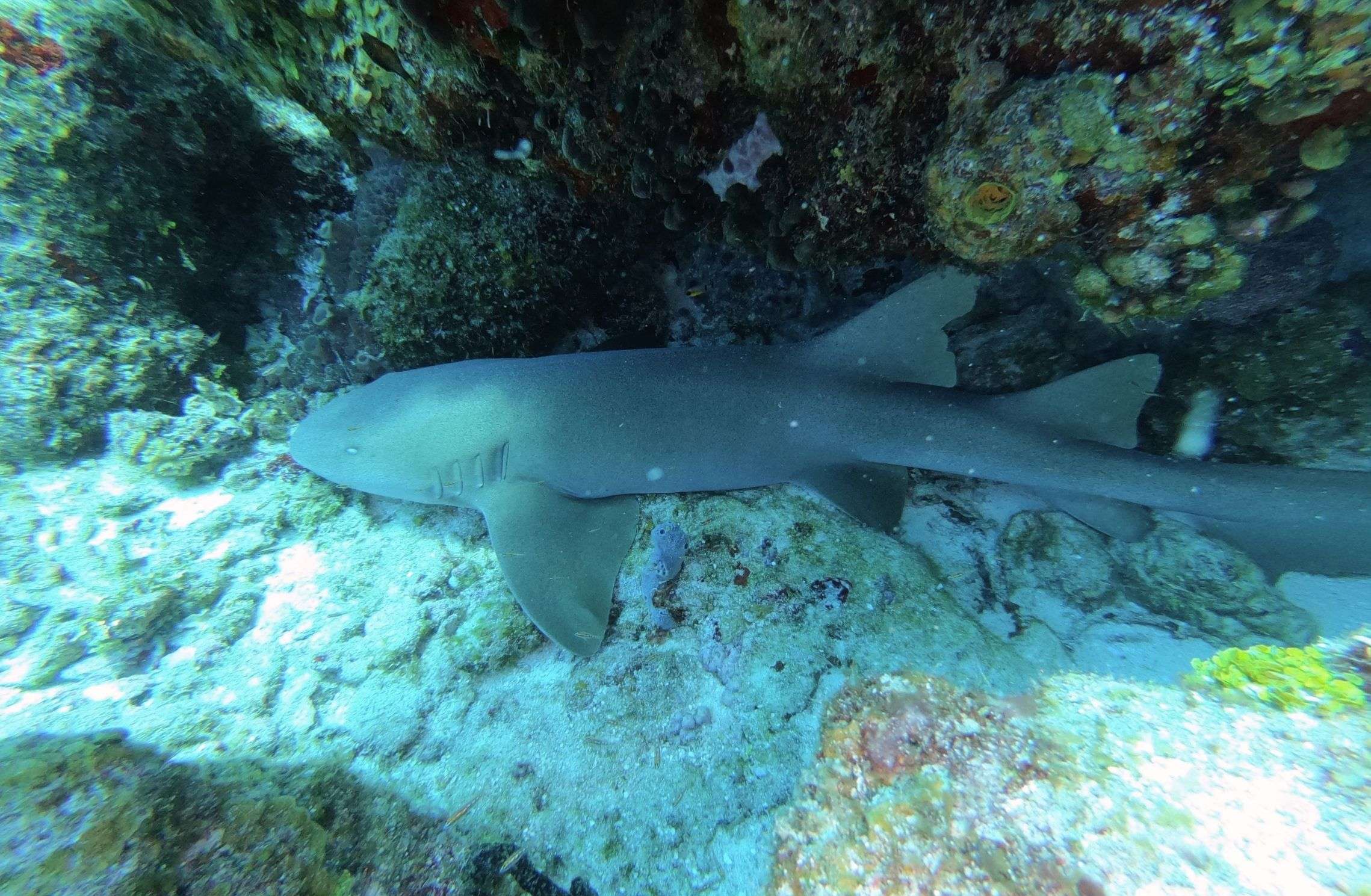
The nurse shark (Ginglymostoma cirratum) is a bottom-dwelling shark that lives in the warm, shallow waters of the Atlantic and the Caribbean.
It can reach 10 feet (3 m), but it’s best known for being very calm!
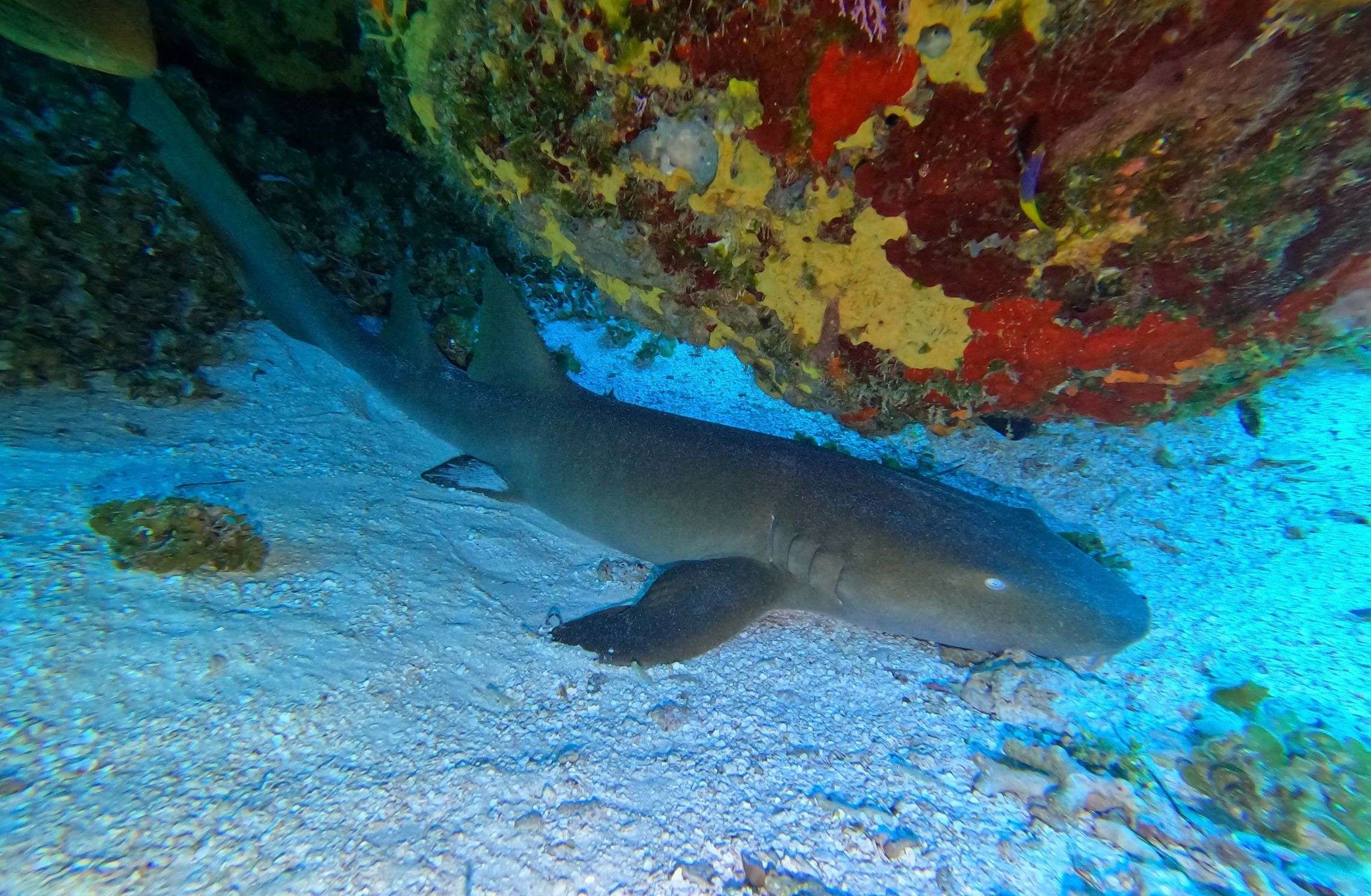
It spends much of its time resting on the sand or under the coral (photo above) and hunts mostly at night (crustaceans, mollusks, small fish).
The nurse shark isn’t aggressive toward humans, but it can bite if it’s disturbed. So, as with all sharks, look but don’t touch 😉
Where can you see nurse sharks?
The Riviera Maya is one of the best regions to come across a nurse shark. You can see them near the reefs of Playa del Carmen on a scuba dive, but your chances are highest in Cozumel, the island just across the water!
What’s the best season to see nurse sharks?
Nurse sharks are found in the Riviera Maya all year round. April to August is usually the most pleasant time, with calmer seas and good visibility.
| Location | Activity | Chances of seeing them | Best time |
|---|---|---|---|
| Playa del Carmen | Diving | High | Year-round (best April to August) |
| Cozumel | Diving / snorkeling | High | April to August (avoid days with nortes) |
| Cancún / Isla Mujeres | Diving | Medium to high | April to September |
| Puerto Morelos | Snorkeling / diving | Medium | Year-round |
| Akumal | Snorkeling | Low to medium | Year-round |
In winter, the north winds (the nortes) can make the sea rough and cause some boat trips to be canceled, especially in Cozumel.
Learn more about diving in Cozumel!The Bull Shark
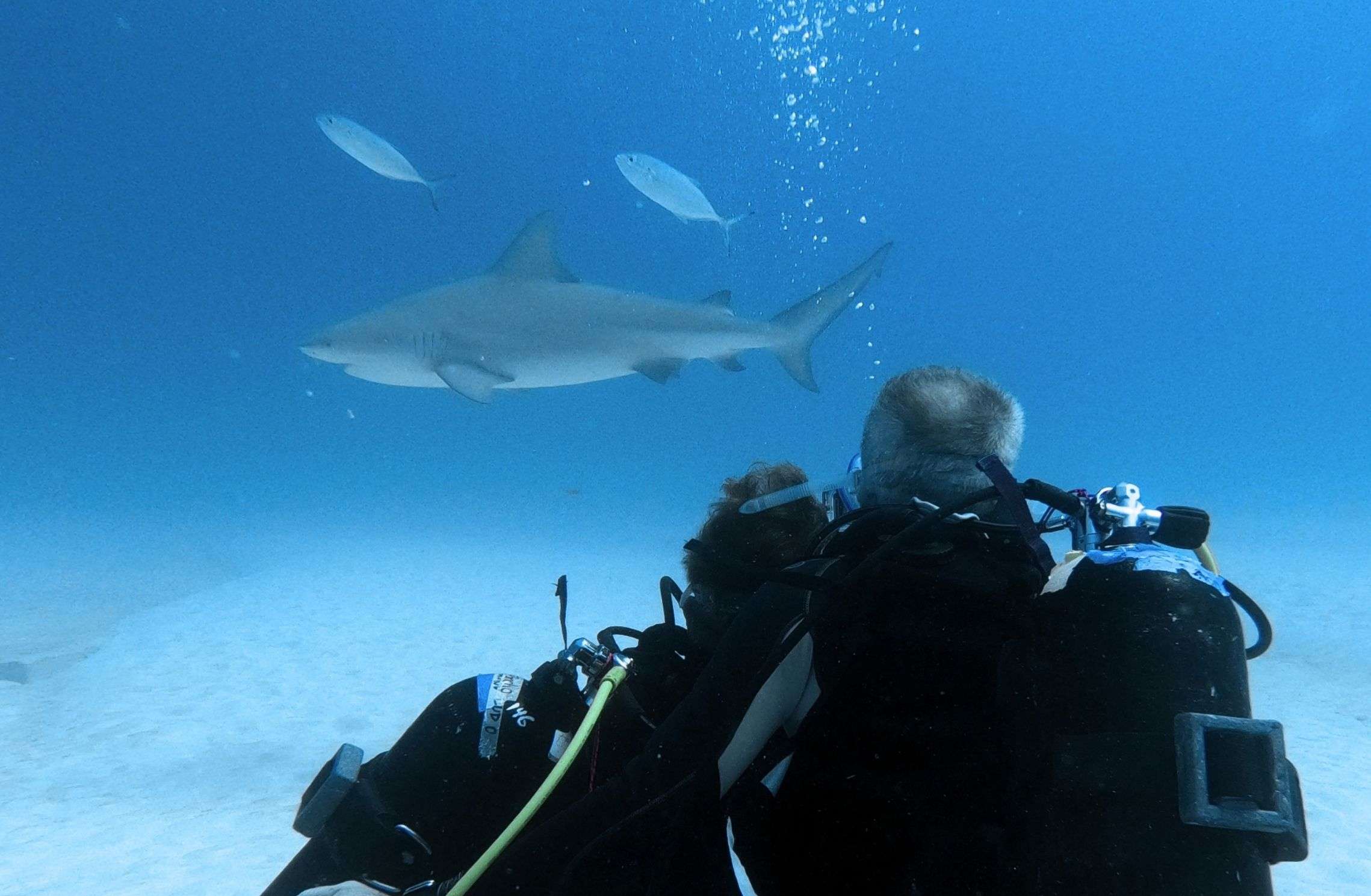
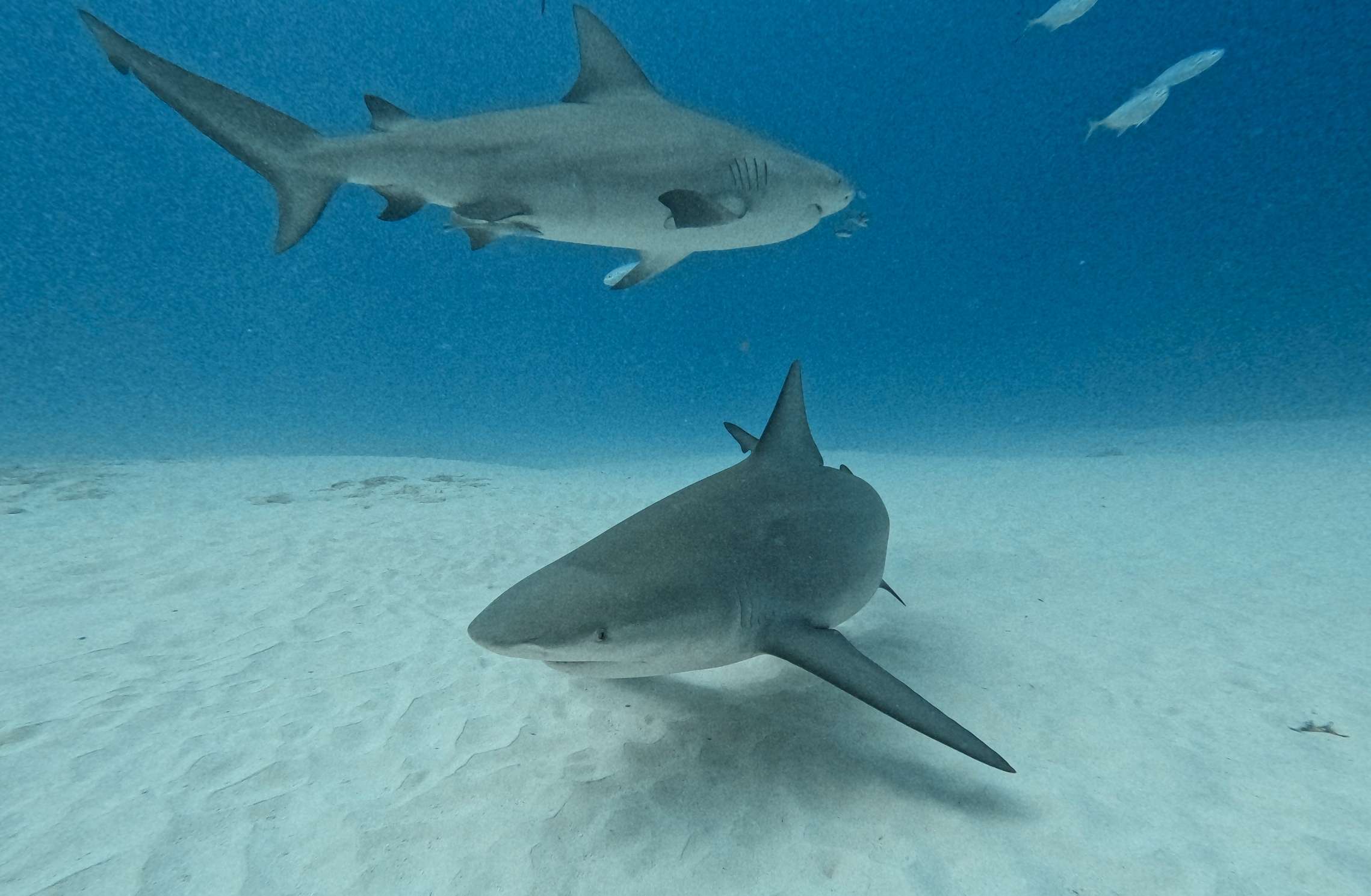
The bull shark (Carcharhinus leucas) is a massive, stocky shark that can grow over 10 feet (3 m) long. You can recognize it by its short, rounded snout and its imposing build.
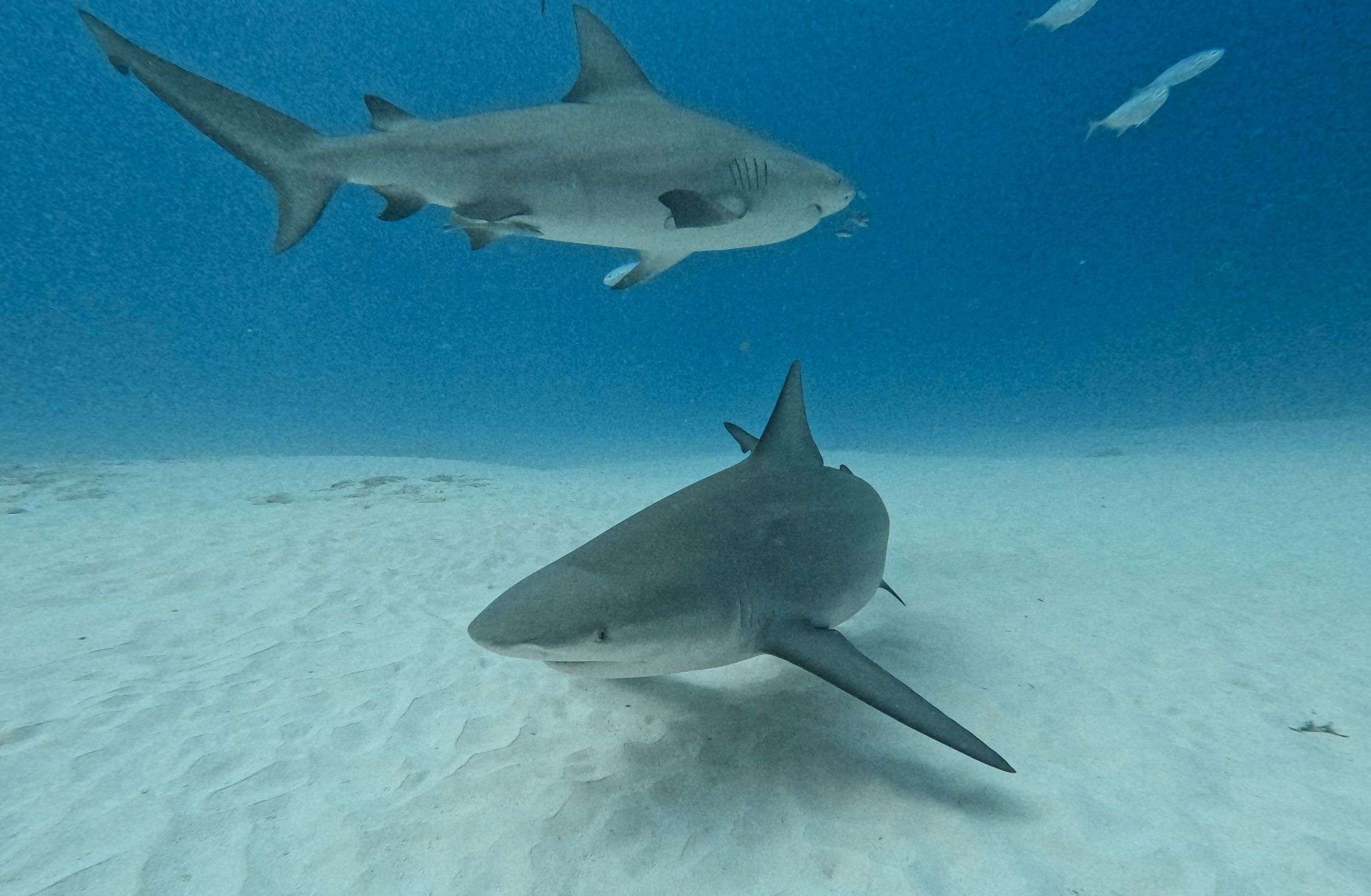
It has a reputation for being more territorial than the nurse shark, but on dives led by professionals, the encounter is safe and respectful of the animal.
Where can you see bull sharks?
The Riviera Maya is one of the best places in the world to see bull sharks, and it all happens in Playa del Carmen!
Every winter, pregnant females gather off the coast of Playa del Carmen, especially near a site nicknamed Shark Point.

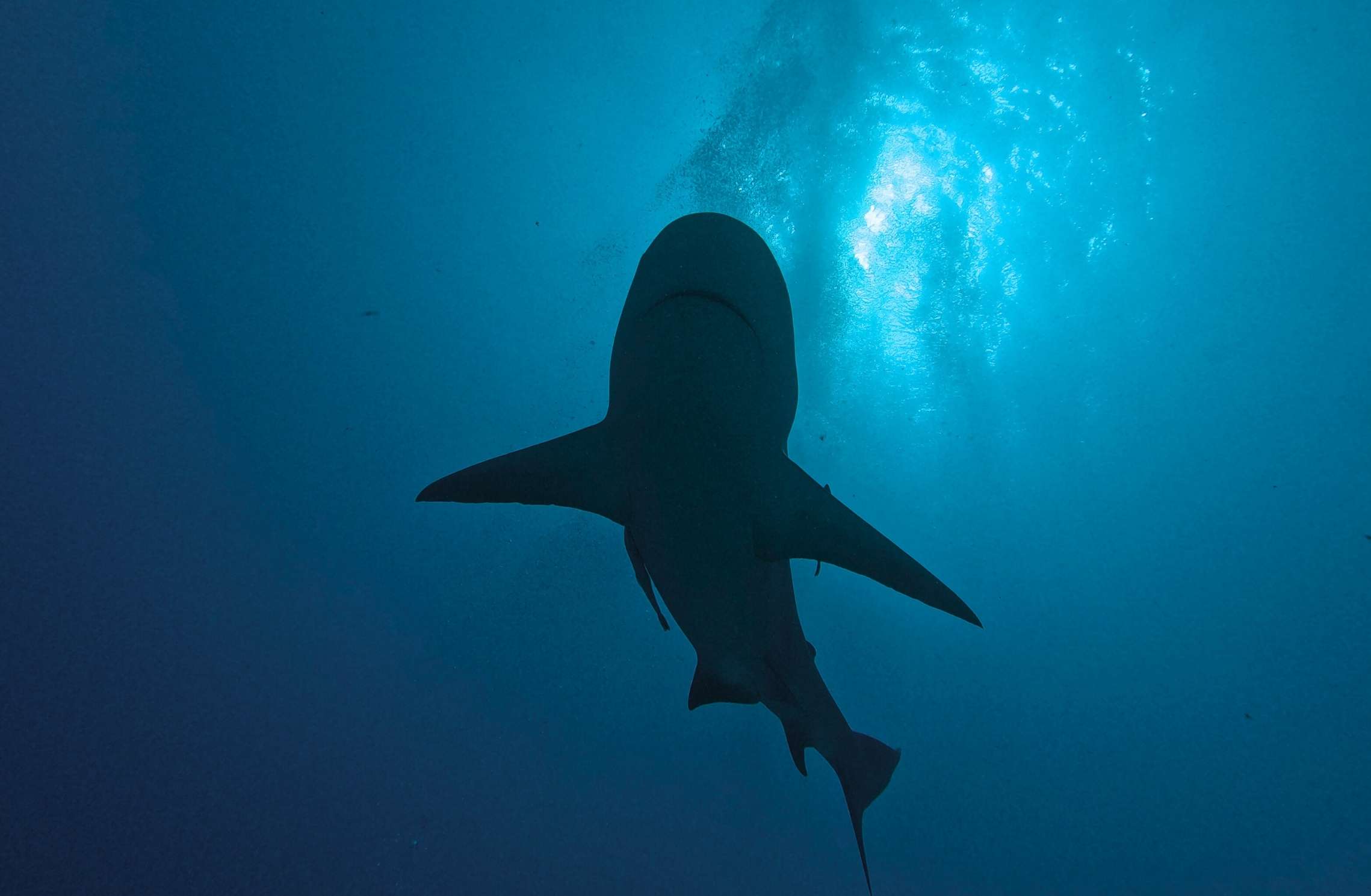
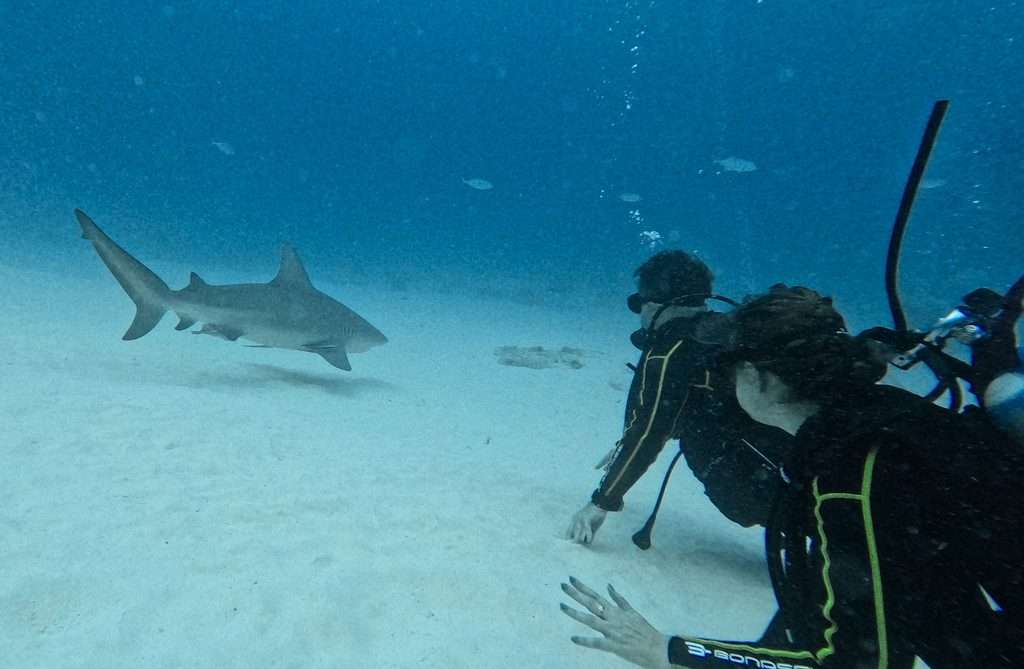
The encounter happens on scuba dives only, usually at a depth of 65 to 100 feet (20 to 30 m). So you need an advanced level (Advanced Open Water or equivalent) and to be comfortable underwater.
Learn more about diving with bull sharks!Are the bull sharks in Playa del Carmen dangerous?
The bull shark is one of the shark species involved in attacks around the world, so it should be taken seriously.
However, in Playa del Carmen, no bull shark attack on a diver during a guided dive has been recorded to date!
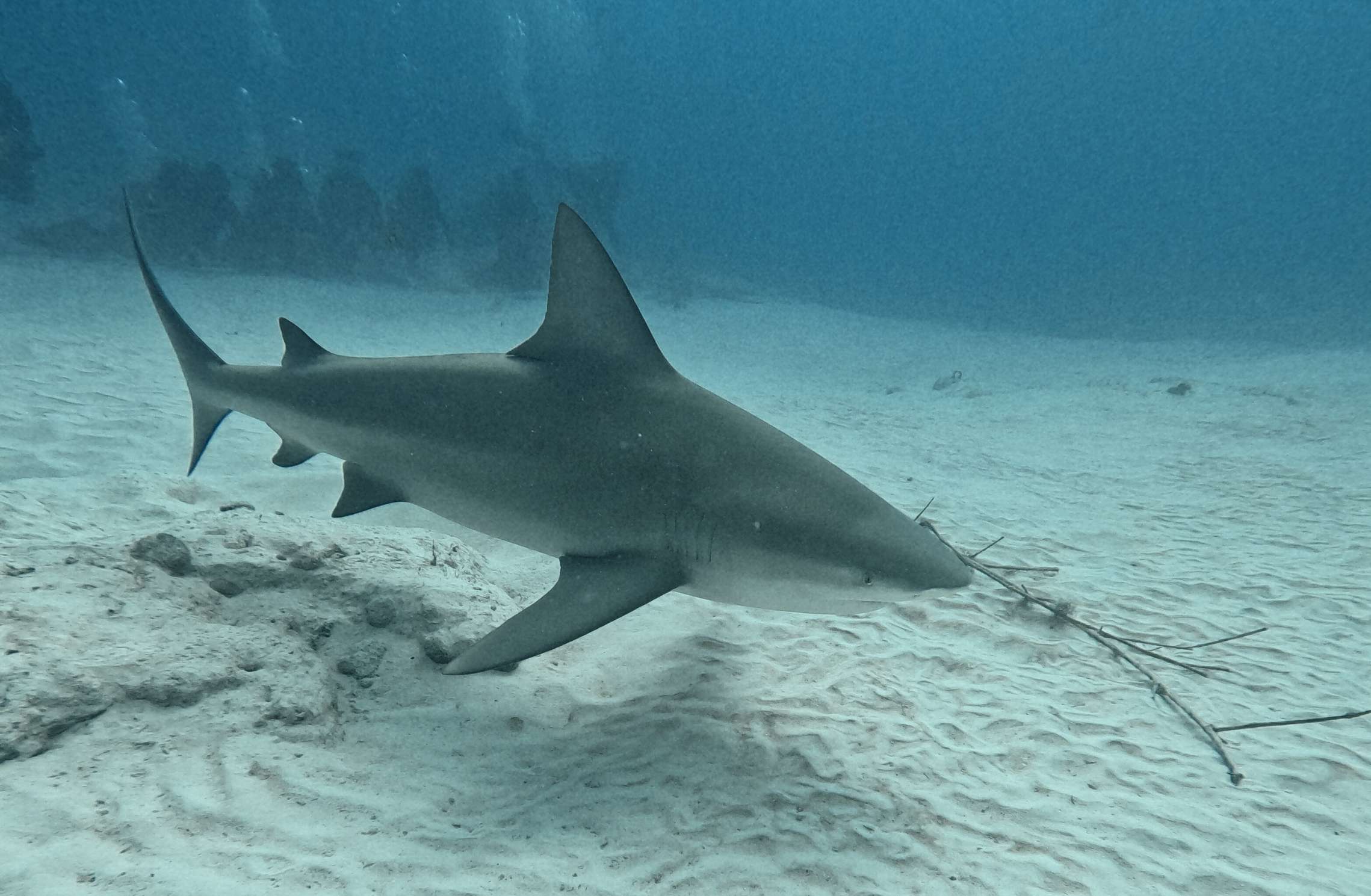
The sharks stay offshore, in deep water, and don’t come near the beaches where people swim. So the risk is very low as long as you follow the rules.
What’s the best season to see bull sharks?
The best time to see bull sharks in Playa del Carmen is generally from mid-November to mid-February, with peak sightings in December and January.
| Location | Activity | Chances of seeing them | Best time |
|---|---|---|---|
| Playa del Carmen | Diving (advanced level) | Very high in season | Mid-November to mid-February (peak December–January) |
| Cozumel | Diving | None | None |
| Cancún / Isla Mujeres | Diving | None | None |
As mentioned above, this is the season when the females migrate to the region to rest and give birth, probably in the mangroves, although the exact location is still unknown. So their presence offshore is almost guaranteed.
Learn more about diving with bull sharks!The Whale Shark
The whale shark (Rhincodon typus) is the largest fish in the world. It can grow up to 46 feet (14 m) long and is easy to recognize by its dark gray back covered in small white spots.
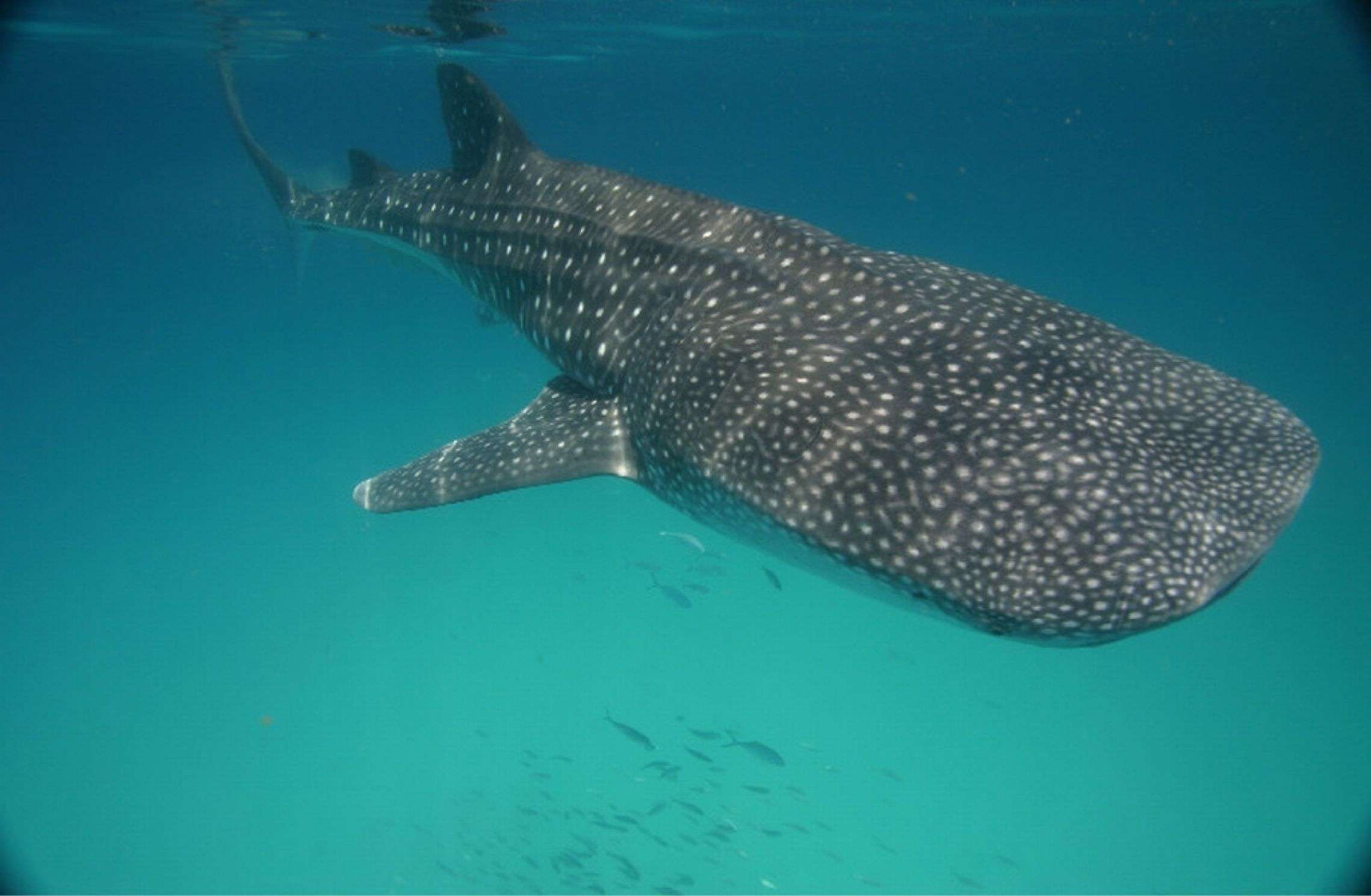
Despite its impressive size, it’s a gentle giant! It feeds only on plankton and small fish, which it filters as it swims with its mouth wide open.
Where can you see whale sharks?
The Riviera Maya is one of the best places in the world to swim with whale sharks! Every summer, they come near Holbox and Isla Mujeres to feed in plankton-rich waters.
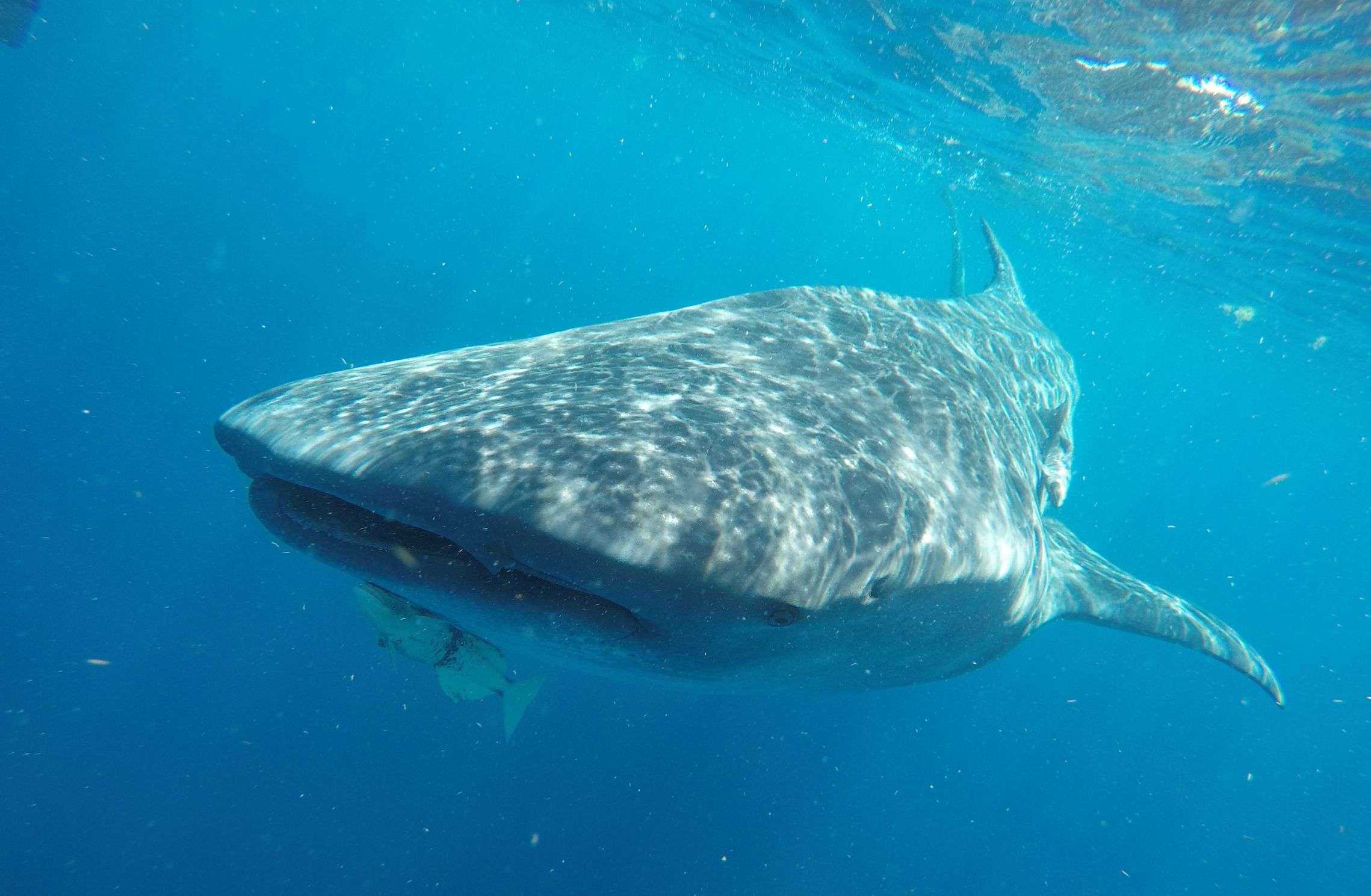
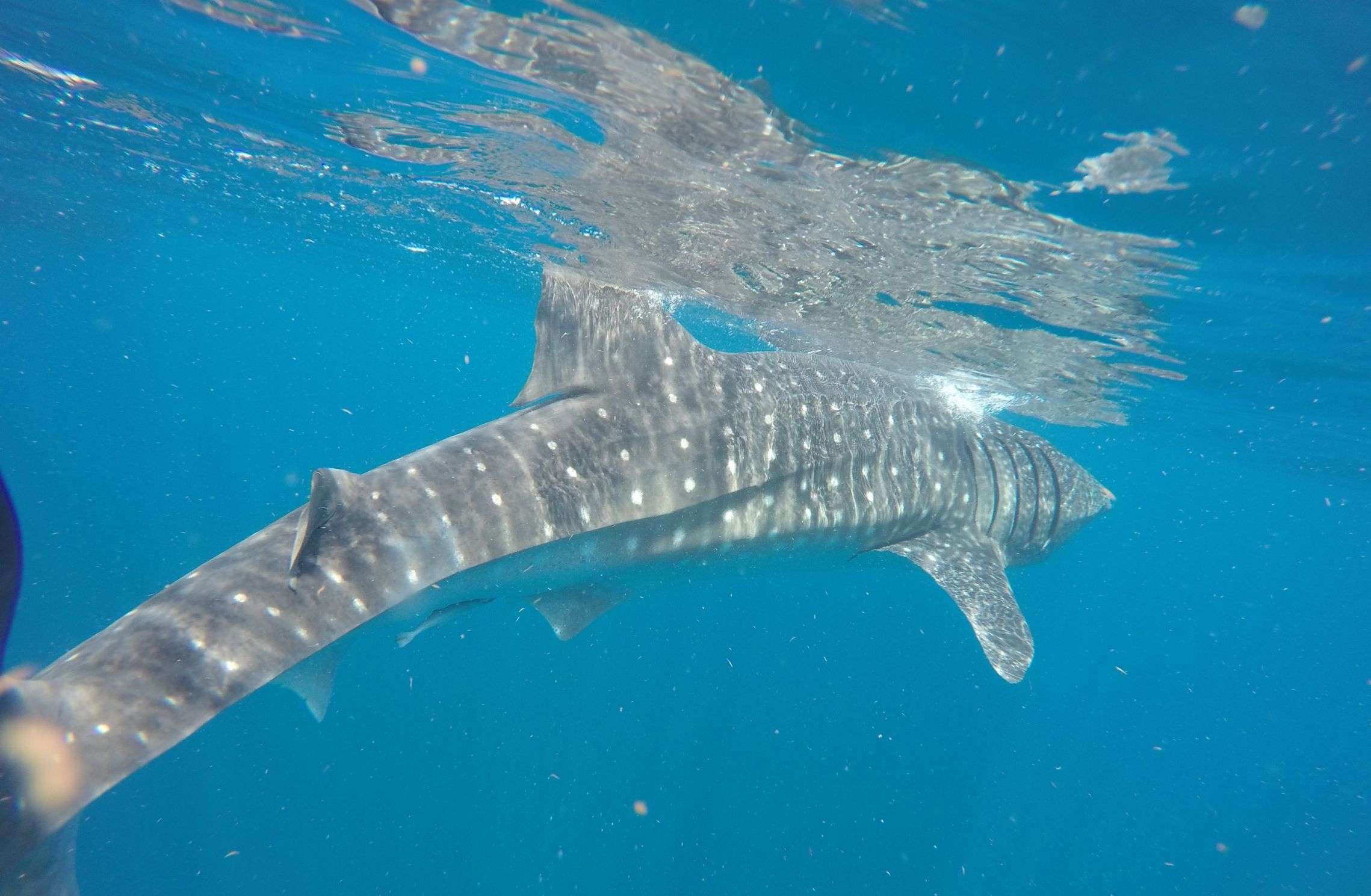
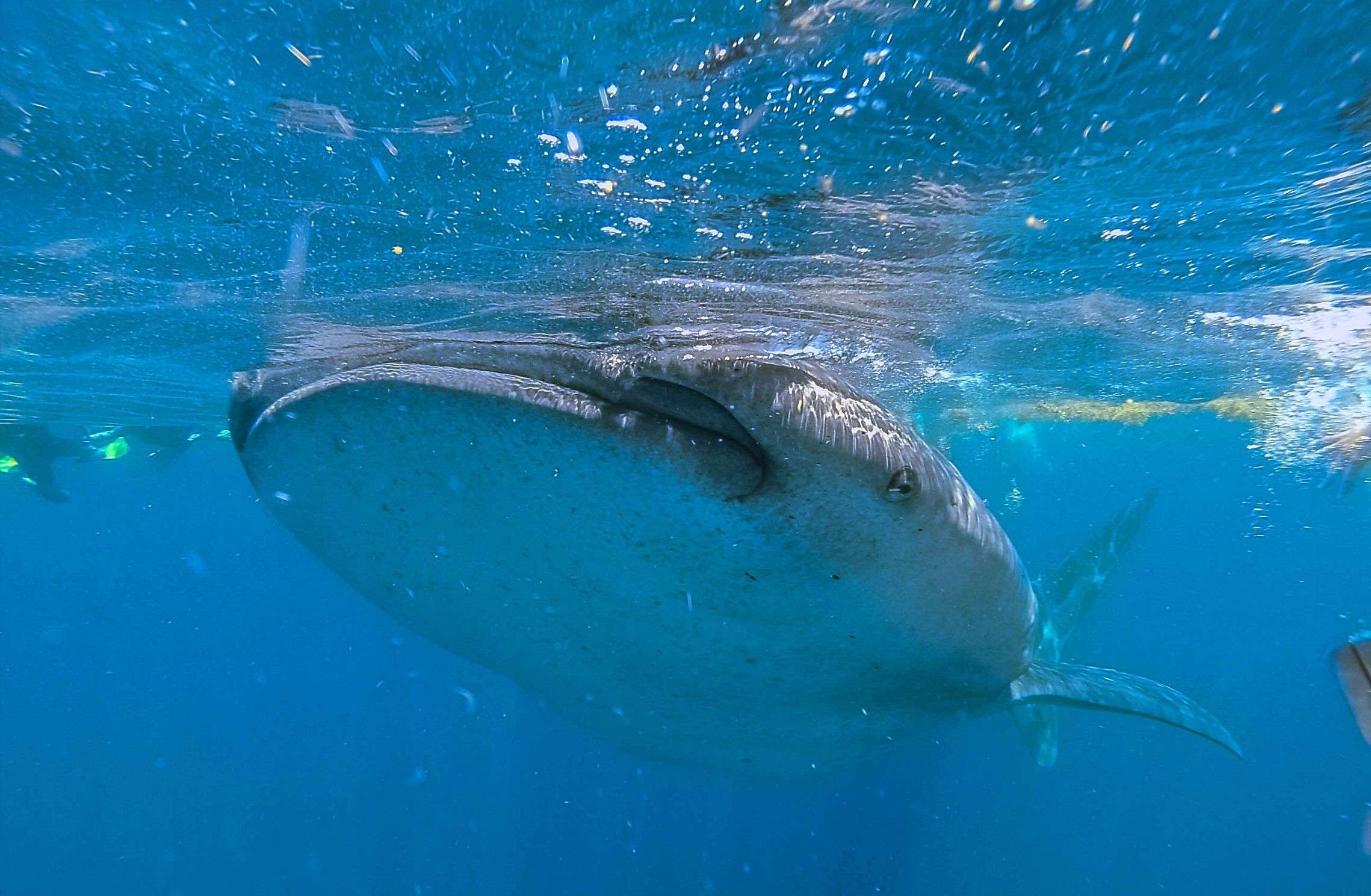
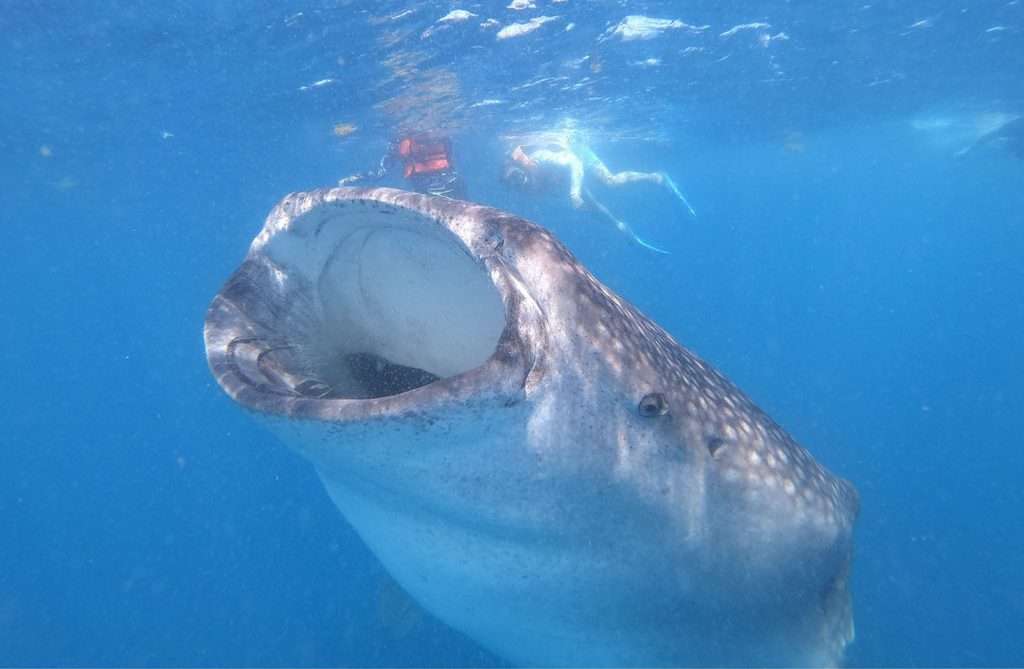
Tours leave mainly from Cancún, Isla Mujeres and Holbox. From Playa del Carmen, several tours include transportation to the departure port. However, there’s no point looking for them in Playa or Cozumel: they don’t visit those waters!
The encounter is by snorkeling only, since scuba diving with whale sharks is not allowed. Good news: no special level is needed, you just have to be comfortable in the water!
Learn more about whale sharks!What’s the best season to see whale sharks?
The official season runs from May 15 to September 17, but nature is unpredictable: to maximize your chances, the best time is mid-June to August!
| Location | Activity | Chances of seeing them | Best time |
|---|---|---|---|
| Isla Mujeres | Snorkeling | Very high in season | Mid-May to mid-September (peak July–August) |
| Cancún | Snorkeling | Very high in season | Mid-May to mid-September (peak July–August) |
| Holbox | Snorkeling | Very high in season | Mid-May to mid-September (peak June–August) |
| Playa del Carmen | Snorkeling | None (tours with transportation to Cancún) | Mid-May to mid-September |
| Cozumel | Snorkeling | None | None |
This is when whale sharks migrate to the north of the peninsula to take advantage of the abundant plankton. Outside the season, no tours are offered.
The Silky Shark
The silky shark (Carcharhinus falciformis) gets its name from its skin, which is particularly smooth to the touch. Slender and grayish-brown, it usually measures between 6 and 10 feet (2 to 3 m).
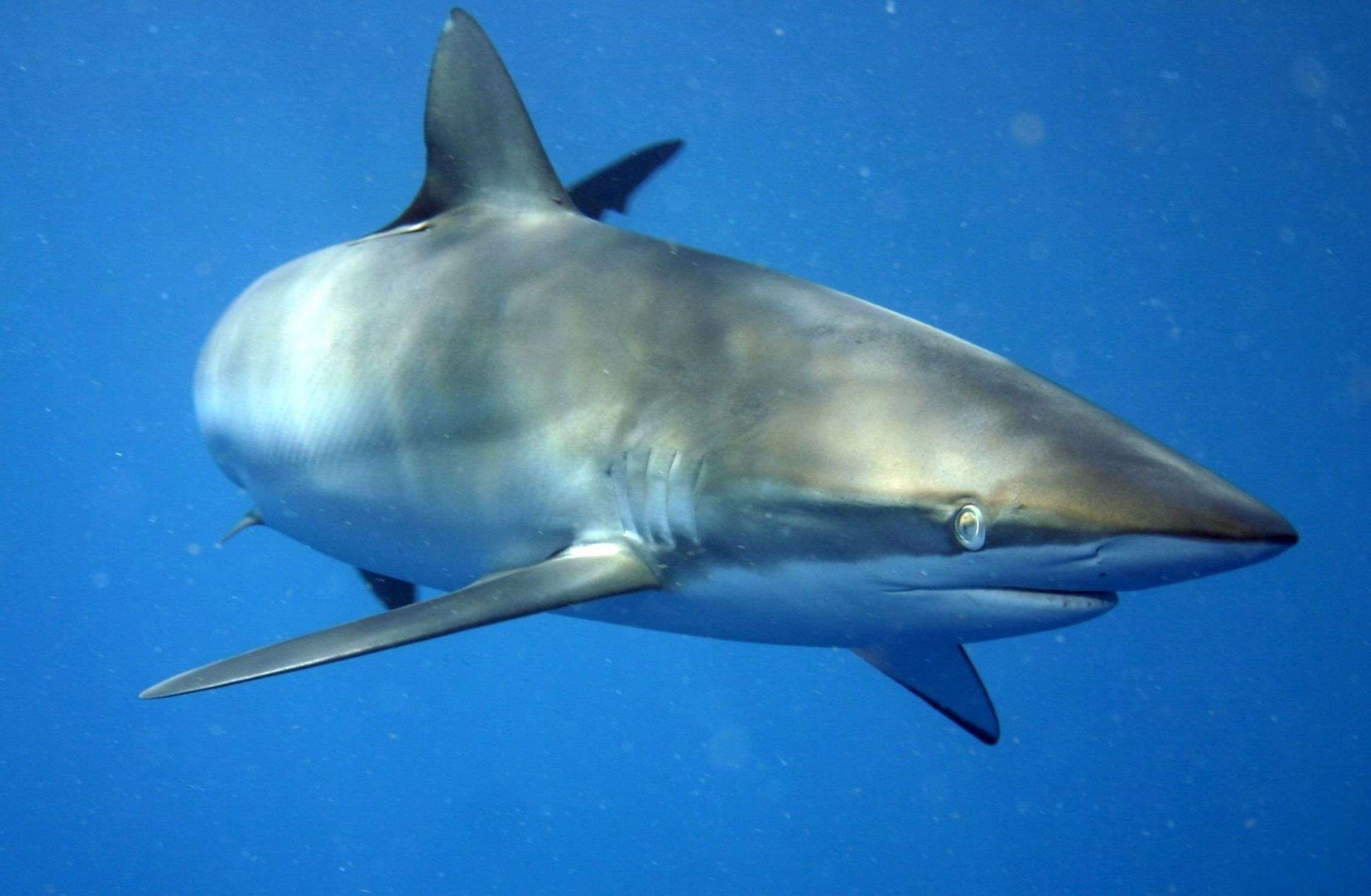
It’s an open-ocean shark: it lives in the open sea, far from the coast, and feeds mainly on tuna, squid and other pelagic fish. Curious by nature, it doesn’t hesitate to approach divers.
Where can you see silky sharks?
Seeing a silky shark in the Riviera Maya is extremely rare. This open-ocean shark prefers deep water, so it doesn’t really visit the reefs of Playa del Carmen, Cozumel or Cancún. The shark you’re more likely to meet while diving in the region is its cousin, the Caribbean reef shark (Carcharhinus perezii).
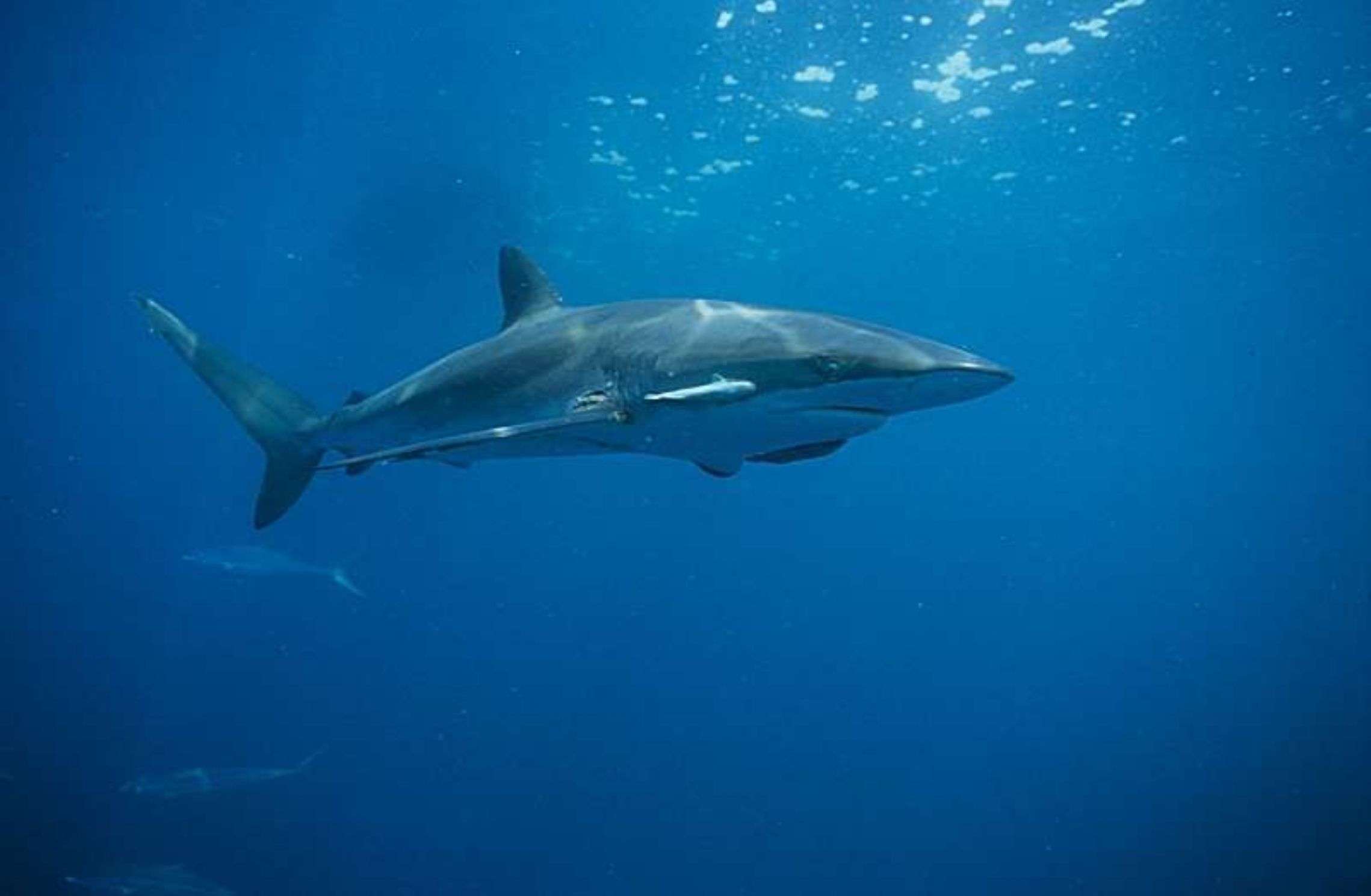
Often mistaken for the silky shark, it patrols along the reefs and walls, especially in Cozumel and near Isla Mujeres.
To really see silky sharks in Mexico, you have to head to the Pacific, to the Revillagigedo archipelago. It can only be reached on a dive cruise (liveaboard), and you’d better have a good level: the dives take place in the open ocean, often in current.
Is the silky shark dangerous?
The silky shark is considered potentially dangerous because of its size and curious temperament, so it’s best to stay cautious around it. In the Riviera Maya, the risk is practically zero, since it doesn’t visit the areas where people swim and dive.
Elsewhere, as in Revillagigedo, encounters happen on dives led by professionals. Just follow the guide’s instructions, stay with the group, and never feed or touch the sharks.
What’s the best season to see silky sharks?
In the Riviera Maya, there’s no particular season to see the silky shark, since it’s too rare there. To really see one in Mexico, head for the Revillagigedo archipelago, where dive cruises generally run from November to June.
| Location | Activity | Chances of seeing them | Best time |
|---|---|---|---|
| Playa del Carmen | Diving | Very low | None |
| Cozumel | Diving | Very low | None |
| Cancún / Isla Mujeres | Diving | Very low | None |
| Revillagigedo (Pacific) | Liveaboard diving (advanced level) | High | November to June |
As mentioned above, the shark you’re most likely to come across while diving in the region is the Caribbean reef shark, especially in Cozumel and around Isla Mujeres.
The Caribbean Reef Shark
The Caribbean reef shark (Carcharhinus perezii) is one of the most common sharks on Caribbean Sea reefs. It usually measures between 6 and 10 feet (2 to 3 m) and can be recognized by its grayish-brown back, white belly and streamlined shape.
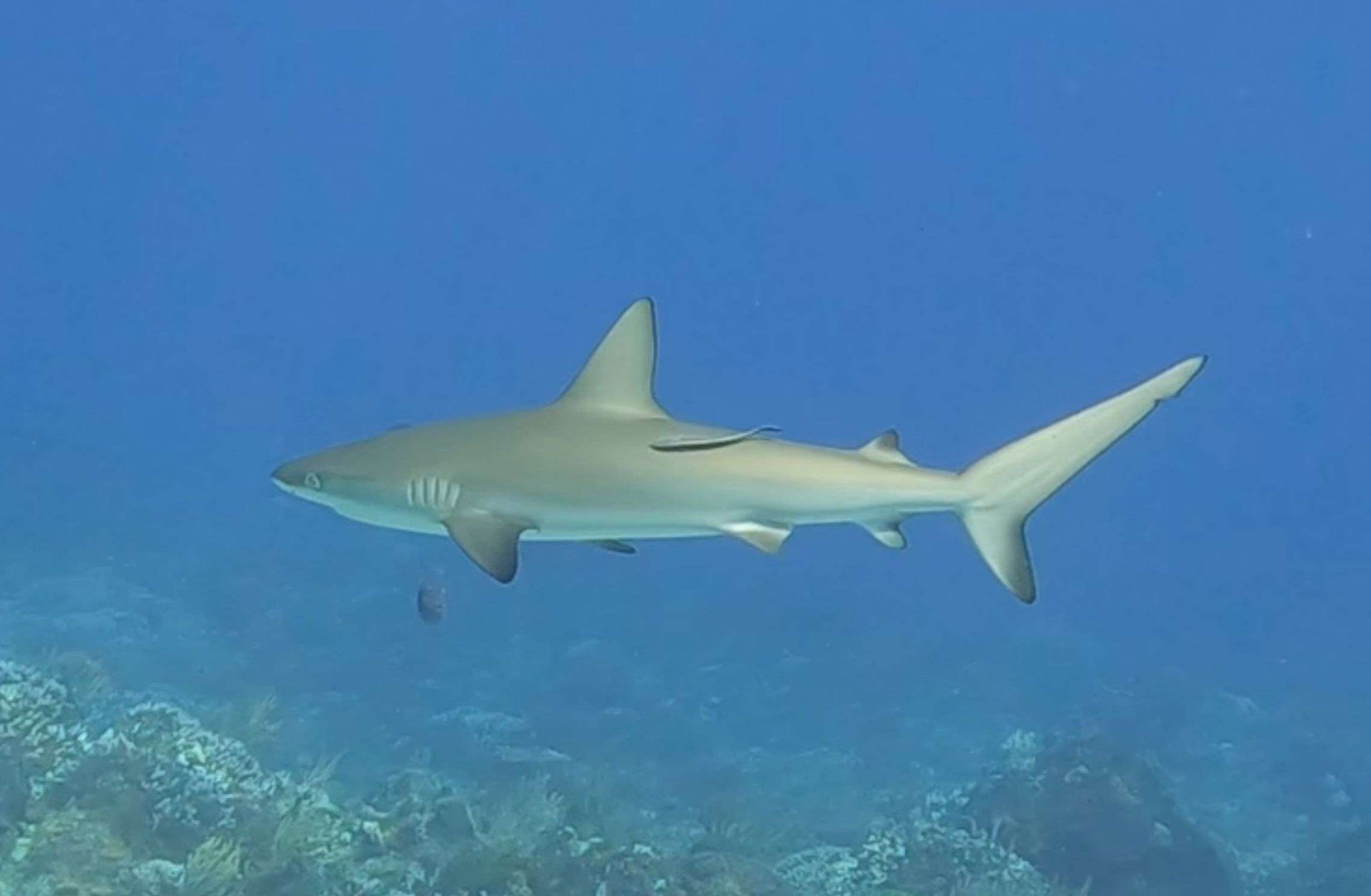
As its name suggests, it lives near coral reefs and walls, where it mostly hunts fish. Fairly shy, it generally keeps its distance from divers.
Where can you see Caribbean reef sharks?
In the Riviera Maya, Cozumel is where you have the best chance of seeing one, along the big walls like Santa Rosa.
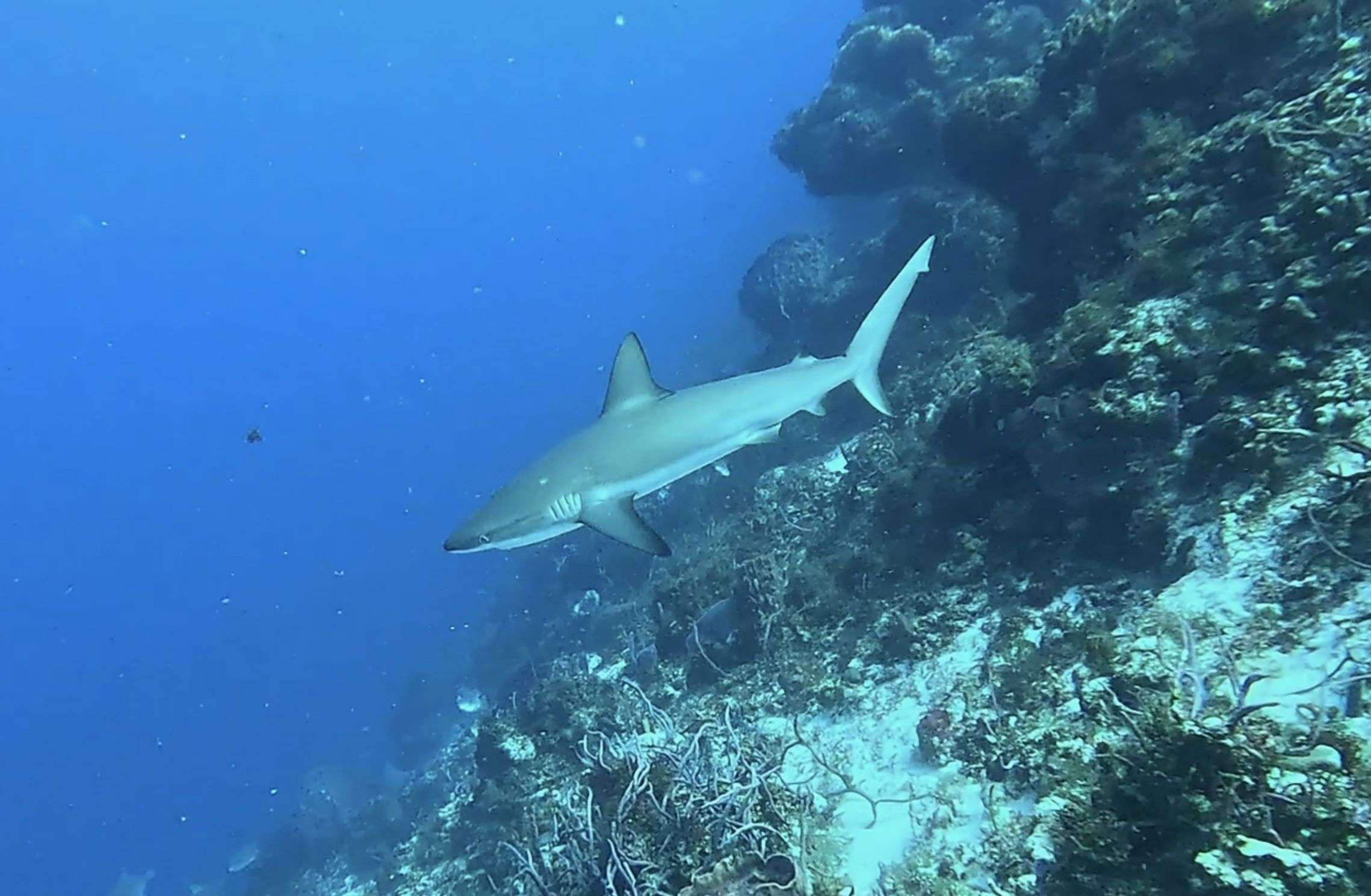
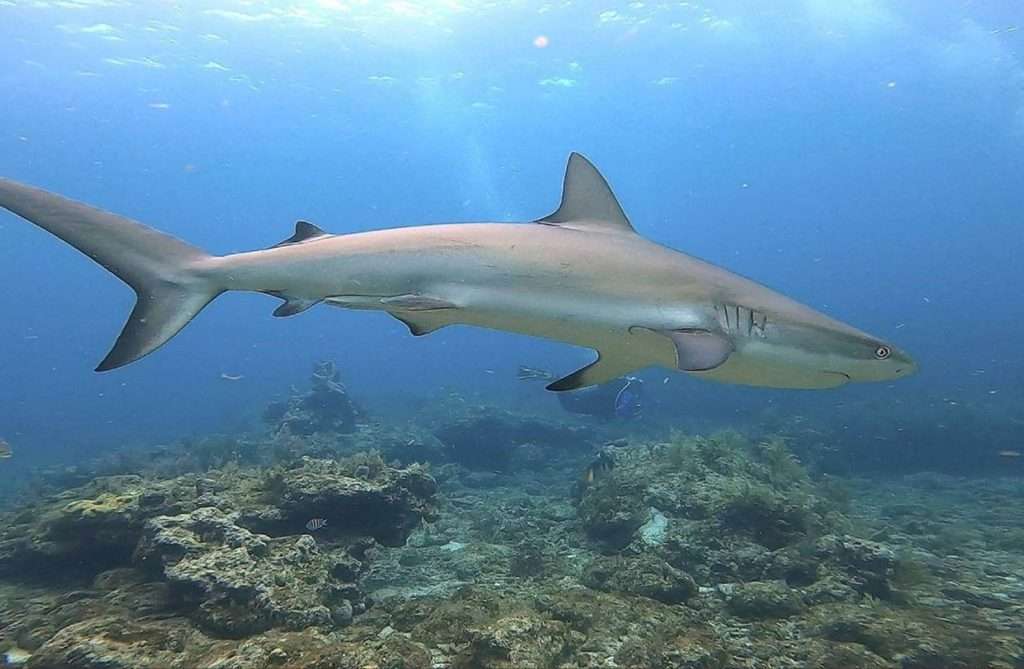
Encounters happen mostly while diving, since this shark prefers the deeper parts of the reef. An Open Water level is enough for most sites, but some Cozumel walls are drift dives with current, so being comfortable underwater is a plus.
Learn more about diving in Cozumel!Is the Caribbean reef shark dangerous?
The Caribbean reef shark is not considered aggressive toward humans. The rare incidents recorded elsewhere in the Caribbean are mostly linked to situations where the sharks were being fed.
On a guided dive, the risk is very low. As with all sharks, keep your distance, don’t touch it, and follow the guide’s instructions.
What’s the best season to see Caribbean reef sharks?
The Caribbean reef shark is found in the Riviera Maya all year round. The period from April to August is still the most pleasant time to dive, with calmer seas and good visibility.
| Location | Activity | Chances of seeing them | Best time |
|---|---|---|---|
| Cozumel | Diving | Medium to high | Year-round (best April to August) |
| Isla Mujeres | Diving | Medium | Year-round |
| Playa del Carmen | Diving | Low | Year-round |
| Cancún | Diving | Low | Year-round |
In winter, the nortes can make the sea rough and cause some trips to be canceled, especially in Cozumel.
The Great White Shark
The great white shark (Carcharodon carcharias) is the most famous of all sharks. It can grow over 16 feet (5 m) long and is recognizable by its dark gray back, white belly and impressive jaws.
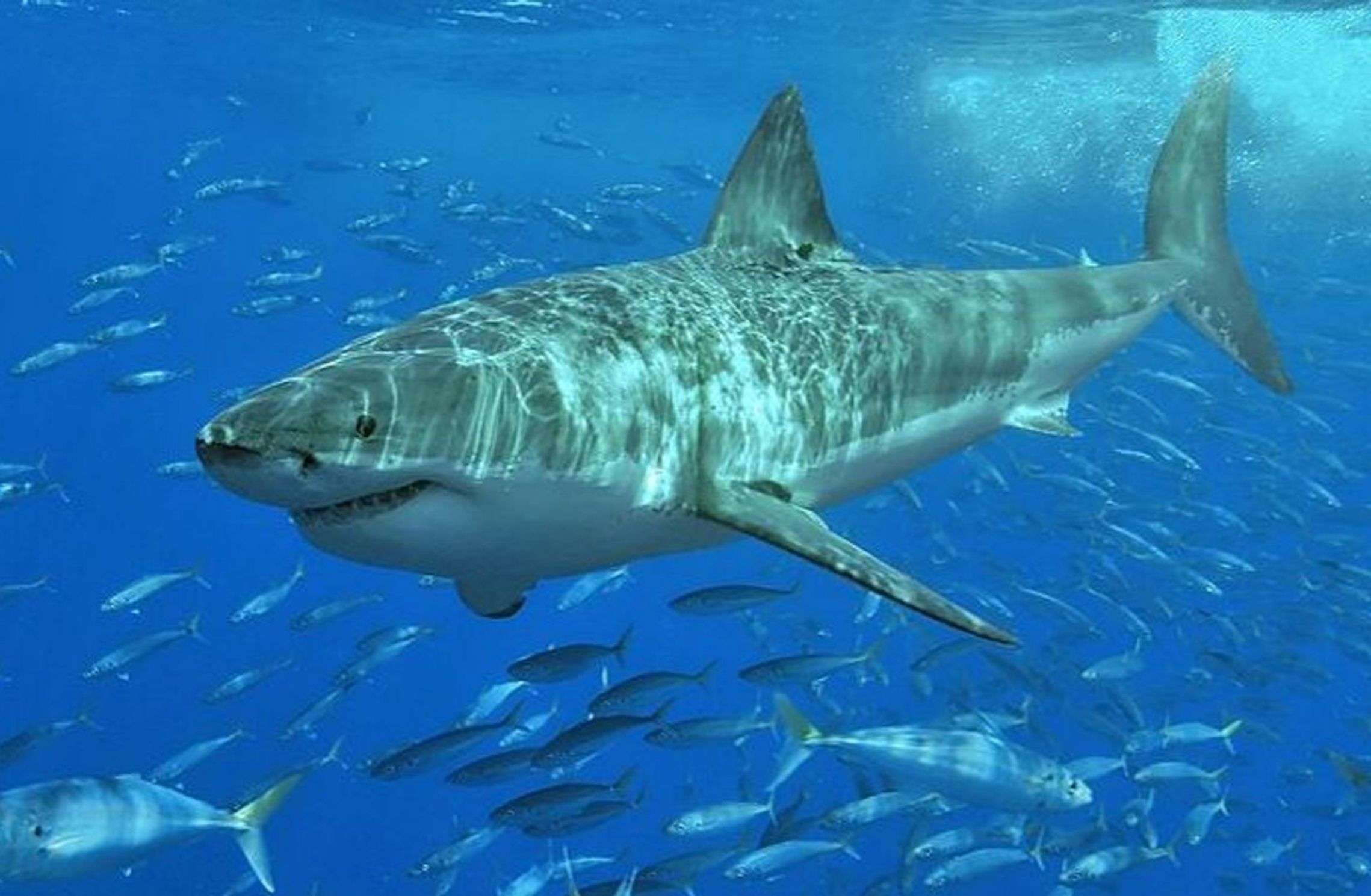
It’s a top predator of temperate and cold waters, feeding mainly on seals, sea lions and large fish. Despite its reputation, it remains a vulnerable species, protected in several countries, including Mexico.
Where can you see great white sharks?
Bad news for Jaws fans! There are no great white sharks in the Riviera Maya! The warm waters of the Caribbean aren’t its habitat, so there’s no chance of seeing one in Playa del Carmen, Cozumel or Cancún.
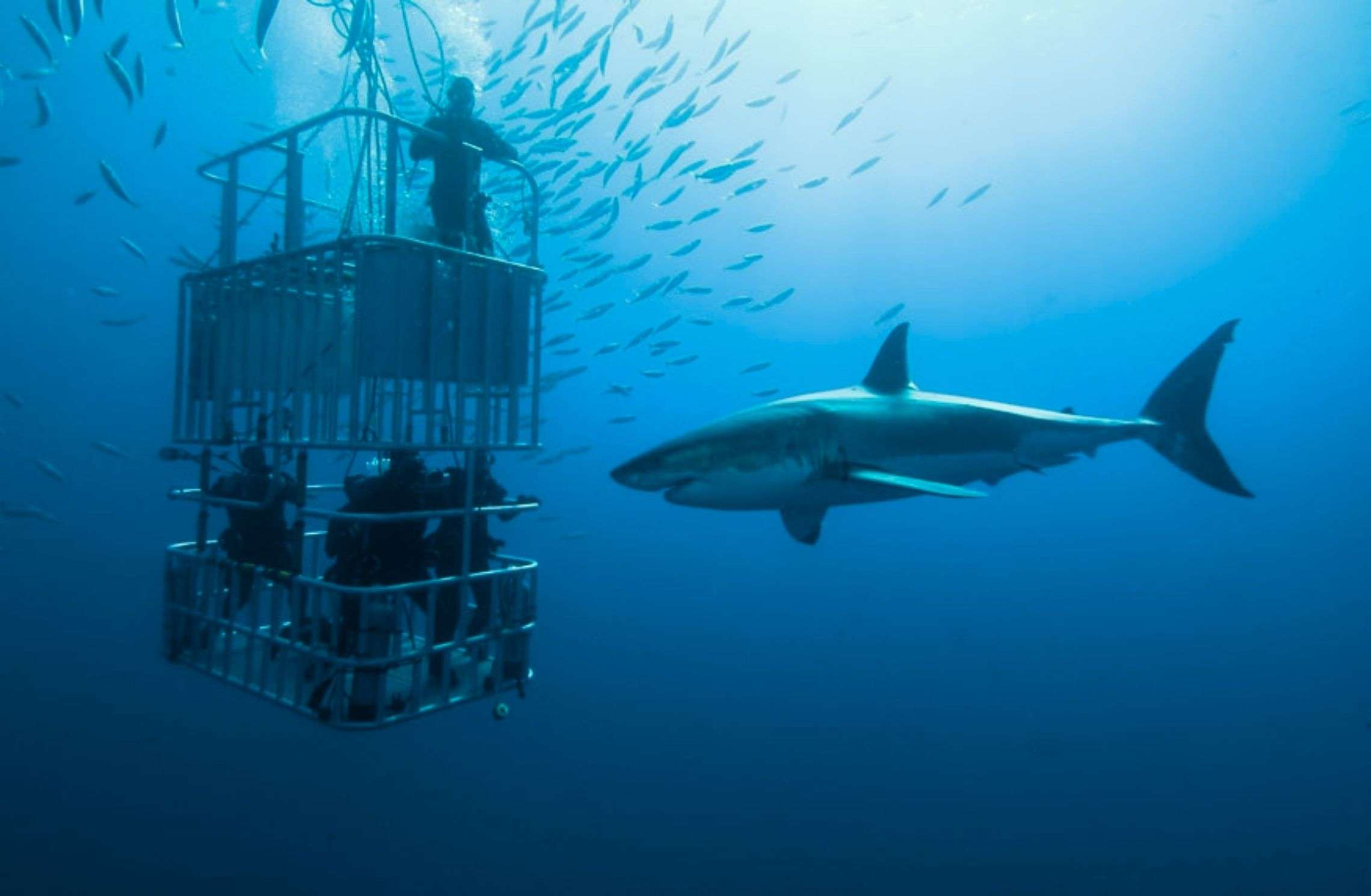
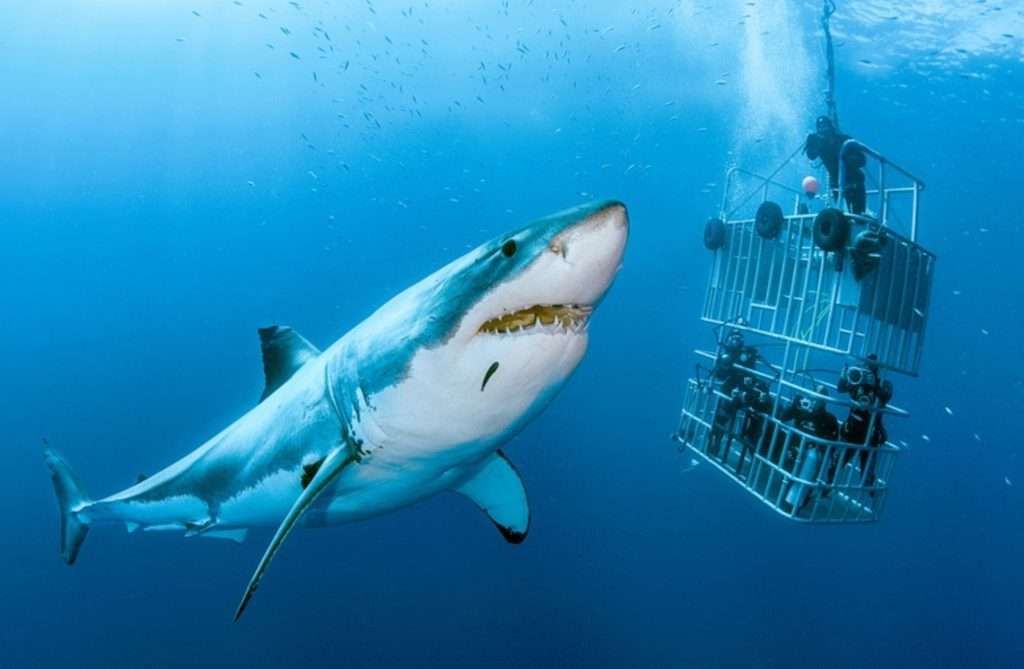
In Mexico, the great white shark lives in the Pacific, around Isla Guadalupe, off Baja California. It used to be one of the best spots in the world for cage diving, but since January 9, 2023, the Mexican government has banned shark tourism there, including cage diving, to protect the species.
Are sharks dangerous?
Sharks have a pretty bad reputation, largely because of the movies… thanks, Jaws!
In reality, the vast majority of shark species are harmless to humans. Worldwide, only a few dozen unprovoked bites are recorded each year, and very few are fatal.
On the other hand, humans kill tens of millions of sharks every year, mainly through fishing. In other words, they’re the ones who should be afraid of us!
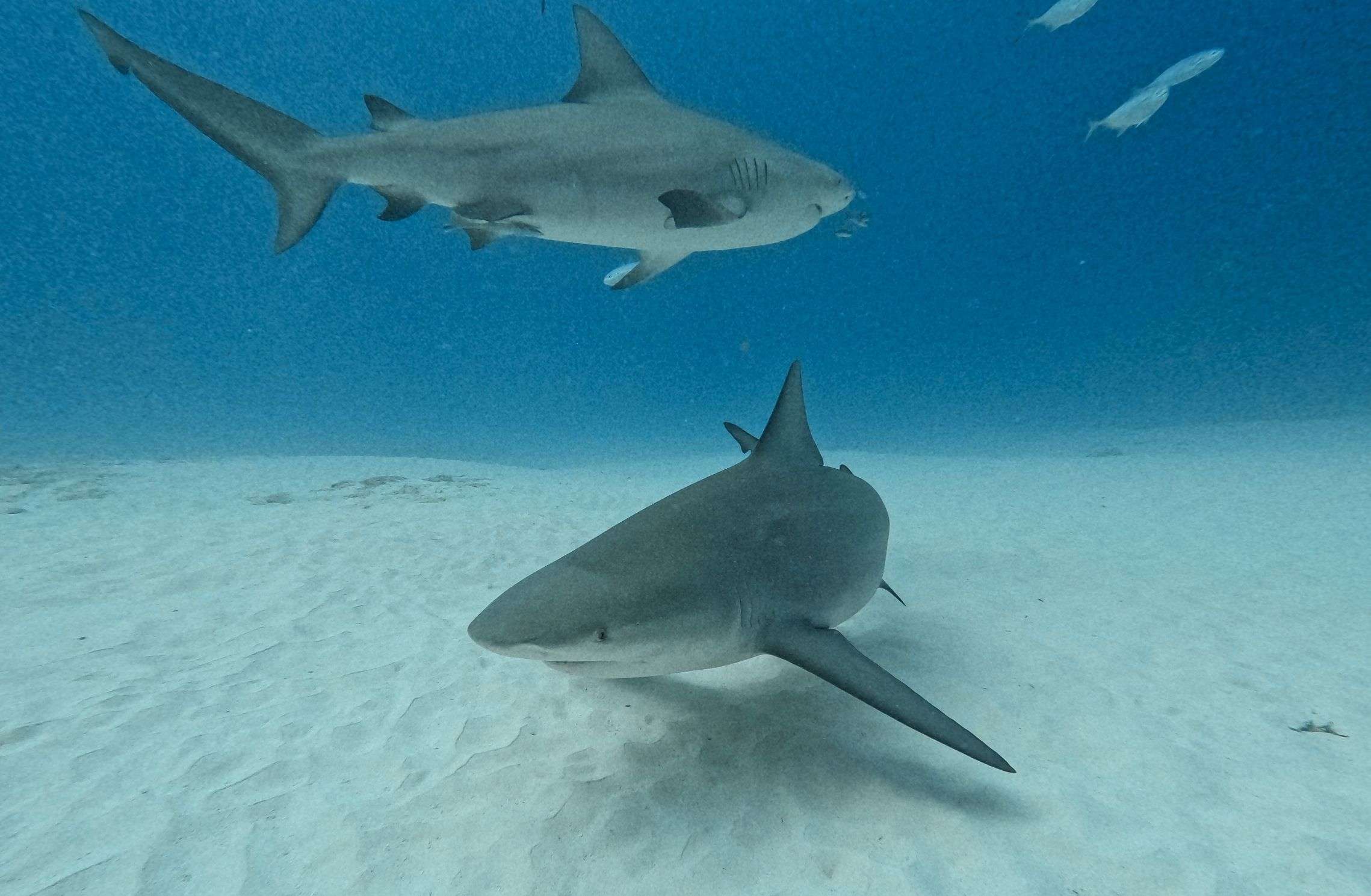
In the Riviera Maya, shark encounters almost always take place on trips led by professionals, either scuba diving or snorkeling.
Incidents are extremely rare there, and sharks generally don’t come near the beaches where people swim. The whale shark is completely harmless, the nurse shark and the Caribbean reef shark are calm if they’re not disturbed, and even the more impressive bull shark can be observed safely on guided dives in Playa del Carmen.
Summary
Mexico, and especially the Riviera Maya, is a dream destination for seeing sharks! Depending on the season and the place, you can have unforgettable encounters:
| Species | Where to see it | Activity | Best time |
|---|---|---|---|
| Nurse shark | Playa del Carmen, Cozumel | Diving / snorkeling | Year-round (best April to August) |
| Bull shark | Playa del Carmen | Diving (advanced level) | Mid-November to mid-February |
| Whale shark | Isla Mujeres, Cancún, Holbox | Snorkeling | Mid-May to mid-September |
| Caribbean reef shark | Cozumel, Isla Mujeres | Diving | Year-round |
| Silky shark | Revillagigedo (Pacific) | Liveaboard diving | November to June |
| Great white shark | Not found in the Riviera Maya | — | — |
And don’t worry: sharks are much less dangerous than their reputation suggests. With good guidance and a few simple rules, observing these fascinating animals is a safe experience… and honestly unforgettable!
Learn more about our shark dives!