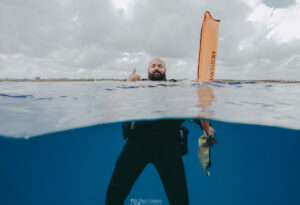
Cenote diving isn’t dangerous when you understand the safety rules and have a good speaking guide 😉
However, the risk increases as you get closer to cave diving, meaning dives in the more advanced sections of cenotes, where divers take specific training courses to be able to dive safely.
The main risks in a cenote
First, it’s important to understand that a cenote is a different environment from ocean diving, and it requires specific reference points and a specific approach.
Before entering the water, your guide will explain that visibility can decrease if sediment is stirred up by fin kicks or poorly controlled buoyancy, even though visibility is generally better in cenotes than in the ocean !
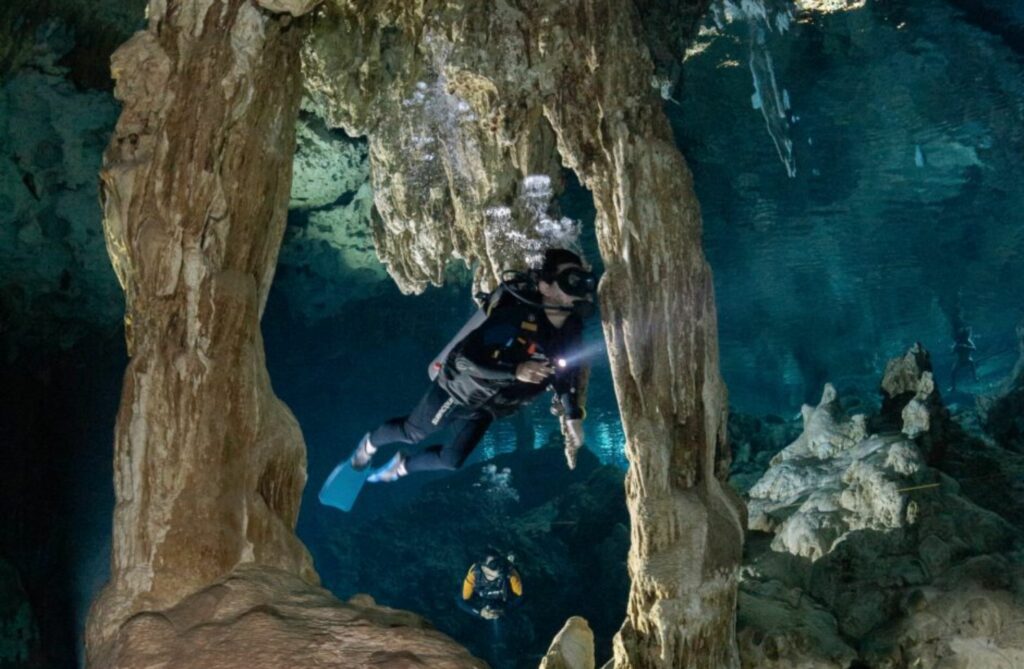
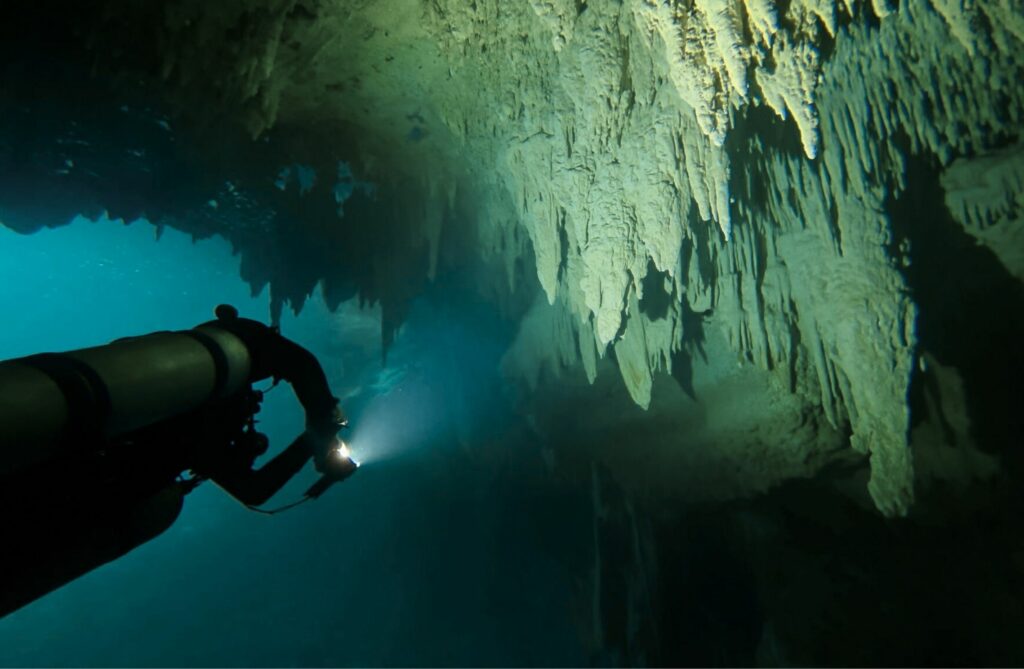
Also, since you are diving under an overhead ceiling, you can’t ascend directly to the surface. That’s why fairly strict air management is necessary, using a specific, simple calculation system that your guide will explain before the dive.
But don’t worry: you’re never far from an exit (maximum 60 m, and around 30 m on average).
The only requirement to dive “safely” in cenotes :
For the dive to go smoothly, the basic rules of scuba diving must be respected. The second rule, after always breathing, is to stay with your buddy !
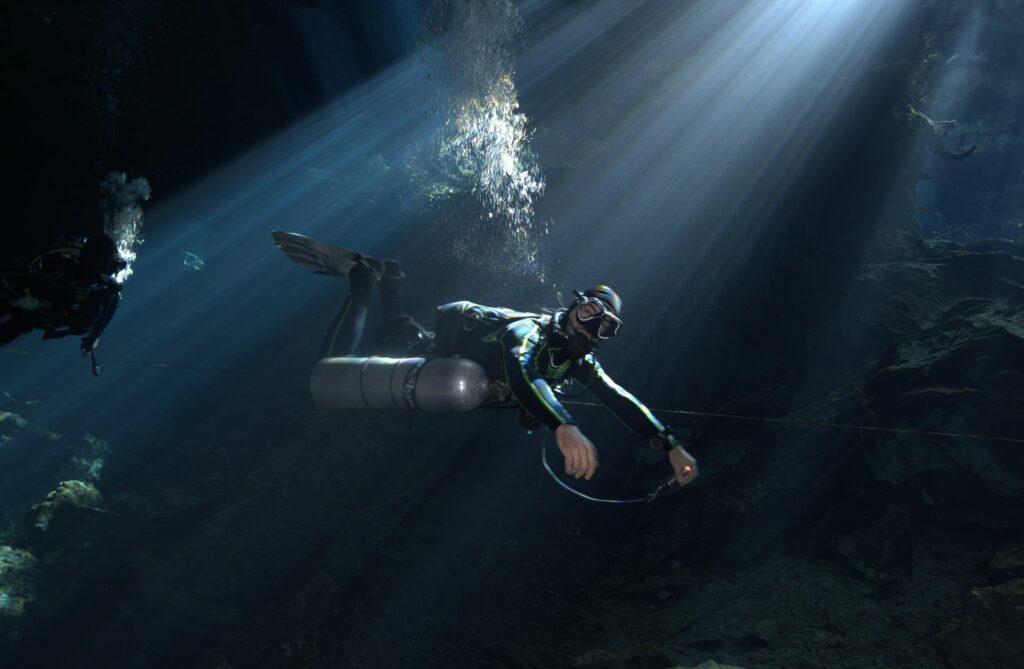
During a cenote dive, your guide relies on a guideline to stay within the cavern zone and avoid entering more advanced areas, where you wouldn’t have the necessary skills.
A few rules to follow
As you know, your guide stays in constant visual contact with the guideline. The idea is to follow it closely and not wander off “just to take a look” into an opening or a side passage.
And of course, respect the limits posted on site. The “cave divers only” signs mark areas reserved for cave diving, with specific training and equipment requirements.
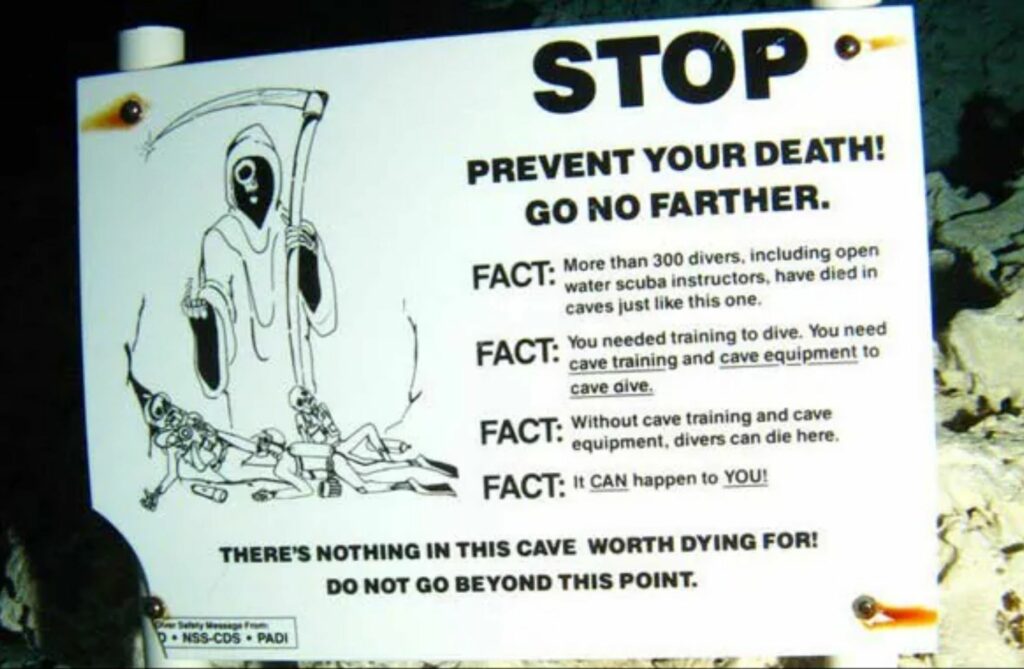
In addition, depending on the cenote, the environment can be very fragile. Avoid touching the formations or the bottom, don’t pick anything up, and control your buoyancy carefully so you don’t damage the site or stir up sediment.
Ideally, limit products like sunscreen oils before the trip and make sure you don’t leave any trash behind, even small items, to preserve the water’s clarity and the cenote’s beauty.
Recommended diver profile :
Ideally, you should already have good control of your buoyancy and finning technique. If you can do a frog kick, that’s perfect for avoiding contact with the bottom and preventing damage to the formations.

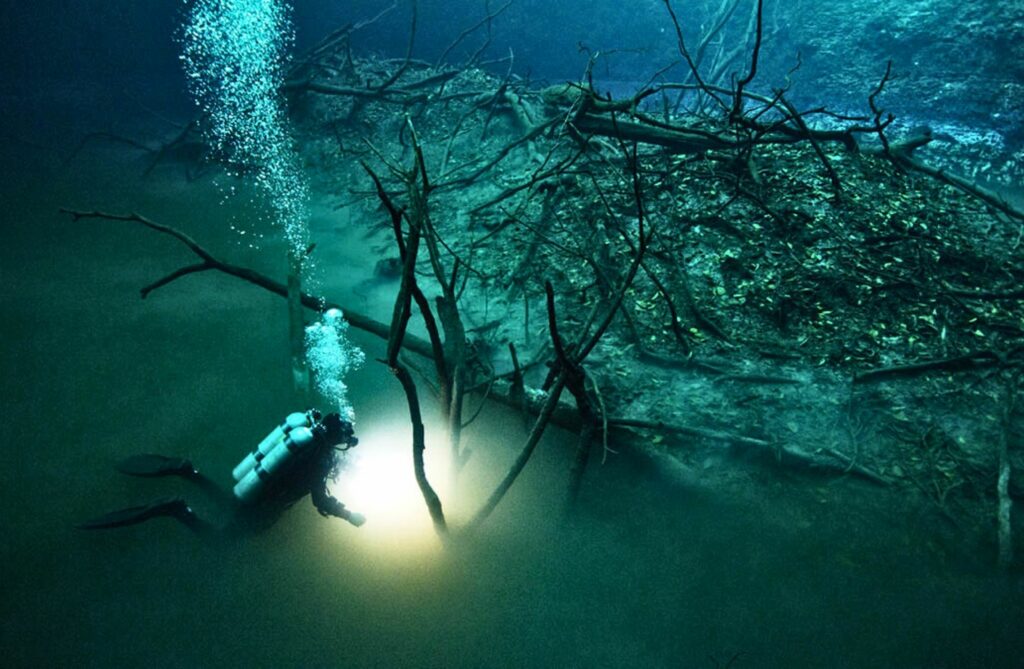
Having a bit of ocean diving experience also helps you feel more comfortable with lower light levels and the fact that you’ll be diving under an overhead ceiling.
Conclusion :
In conclusion, cenote diving can remain a very safe experience when you are a certified recreational diver with good buoyancy control, supervised by a qualified guide, and you follow the rules.
If you share your level, number of dives, and how comfortable you are underwater, I can point you toward the types of cenotes that would suit you best.