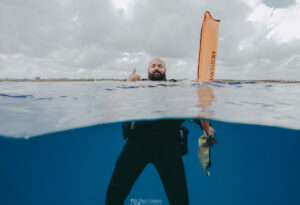
Cenotes fascinate as much as they intrigue. Beneath their calm waters lie vast worlds that few people can imagine. Many see them as simple natural pools, perfect for cooling off… but the reality is far more spectacular.
In Mexico, the depth of cenotes varies greatly: some are only a few meters deep, while the most extreme can reach depths of over 300m.
Most cenotes accessible to the general public have an average depth of 10 to 15m, but some plunge beyond 100m, revealing worlds where light disappears, where the water changes density, and where only the most experienced divers can venture.
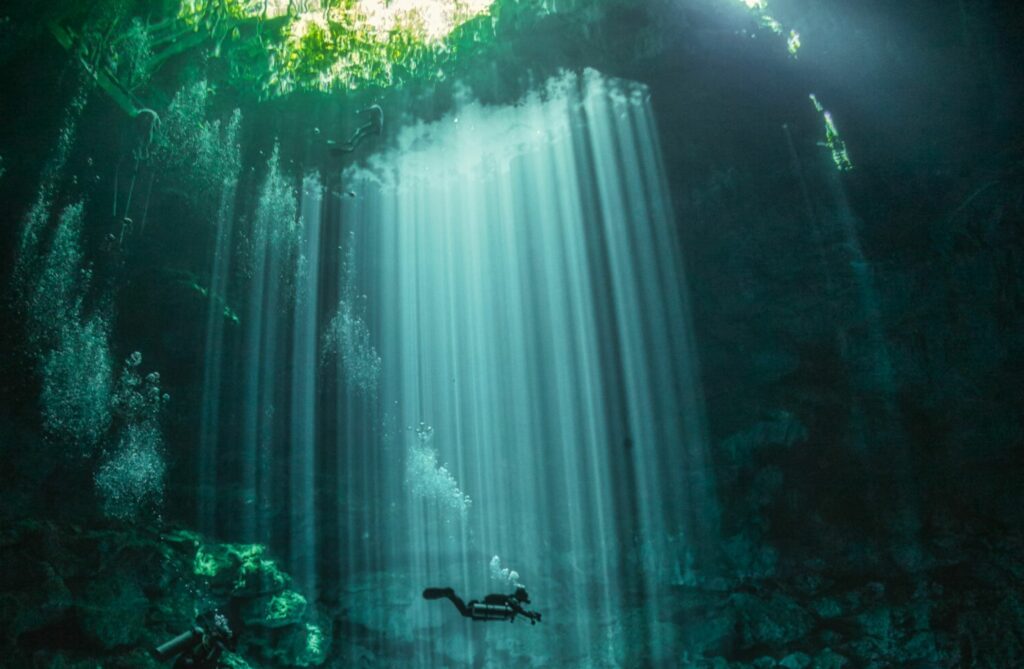
What makes a cenote deep?
A cenote is the result of thousands of years of limestone erosion, which eventually creates water-filled cavities.
Over time, some of these caverns expand and become true vertical shafts, like Cenote The Pit.
In the Yucatán, this phenomenon is particularly common due to the composition of the soil. This explains why some caverns are very accessible, while others descend literally into the depths of the earth.
Why are some cenotes deeper than others?
The depth of a cenote depends on several natural factors. First, the type of ground collapse: some openings are shallow, while others sink much deeper.
Then, the evolution of underground caverns also plays a role: over time, water carves, widens, or causes certain areas to collapse. The mixing of freshwater and saltwater also influences the shape of cenotes, as saltwater coming from the sea can intensify erosion.
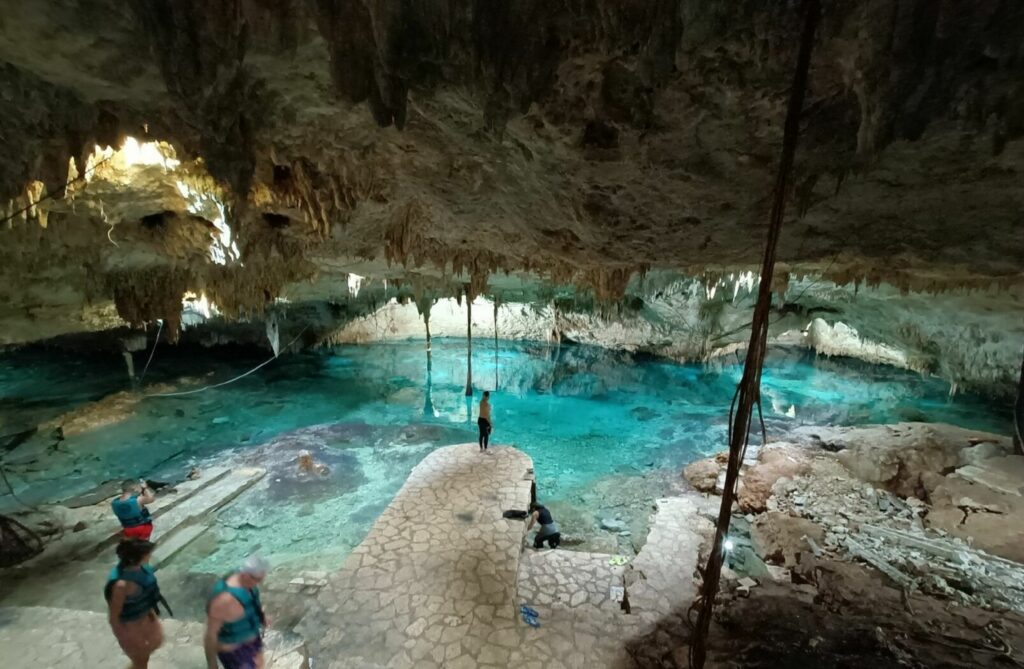
Finally, movements of the water table gradually modify the levels and internal structures. In many cenotes, there are two distinct layers: freshwater at the surface, and below it, a mixing zone with saltwater called the halocline, which creates a blurry, shimmering visual effect.
These different elements explain why some cenotes are shallow… while others plunge to impressive depths.
What is the deepest cenote ?
The deepest cenotes accessible to divers in the Riviera Maya are mainly frequented for technical diving.
Cenote El Pit (near Tulum) reaches a maximum depth of around 120 to 130m. It is considered the deepest known cenote in the state of Quintana Roo and one of the most spectacular for deep diving.
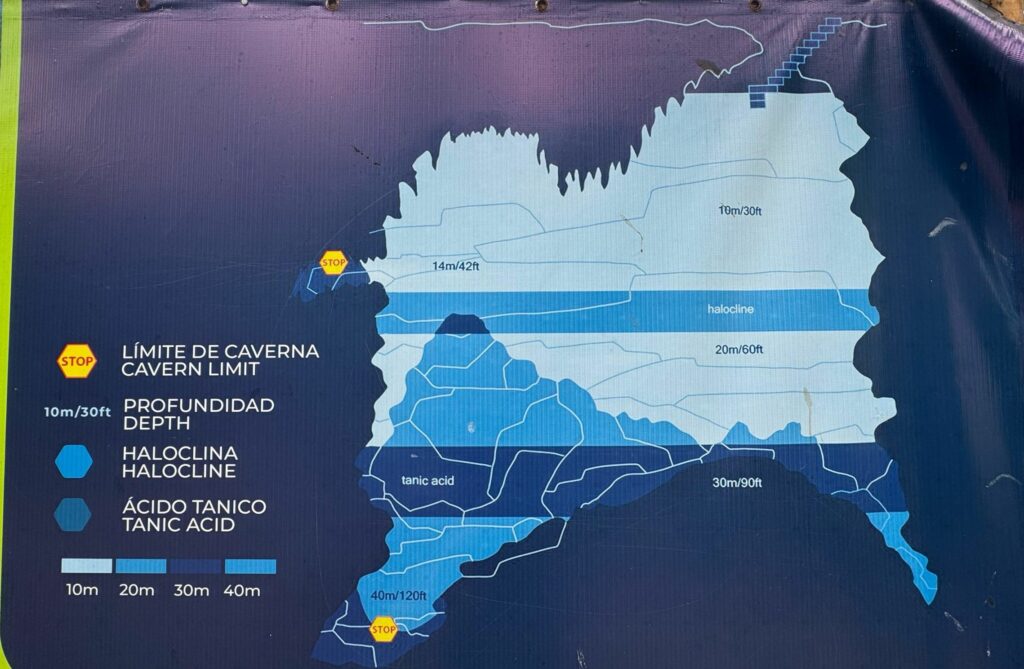
Even though it reaches extreme depths, it is possible to dive there starting from the Open Water level, as some accessible areas are located in the upper section, where light is still present.
Why does cenote diving require special training?
Diving in deep, enclosed environments requires far more than experience in open-water diving. The conditions are specific, sometimes unpredictable, and leave no room for error.
The diver must be able to manage multiple air sources in case of failure, navigate in total darkness using only a torch, anticipate decompression requirements linked to long periods spent at depth, maintain perfect buoyancy to avoid touching the ceiling or stirring up sediment, understand the structure of the cave and its exits, and react instantly in the event of a loss of visibility or disturbance of the halocline.
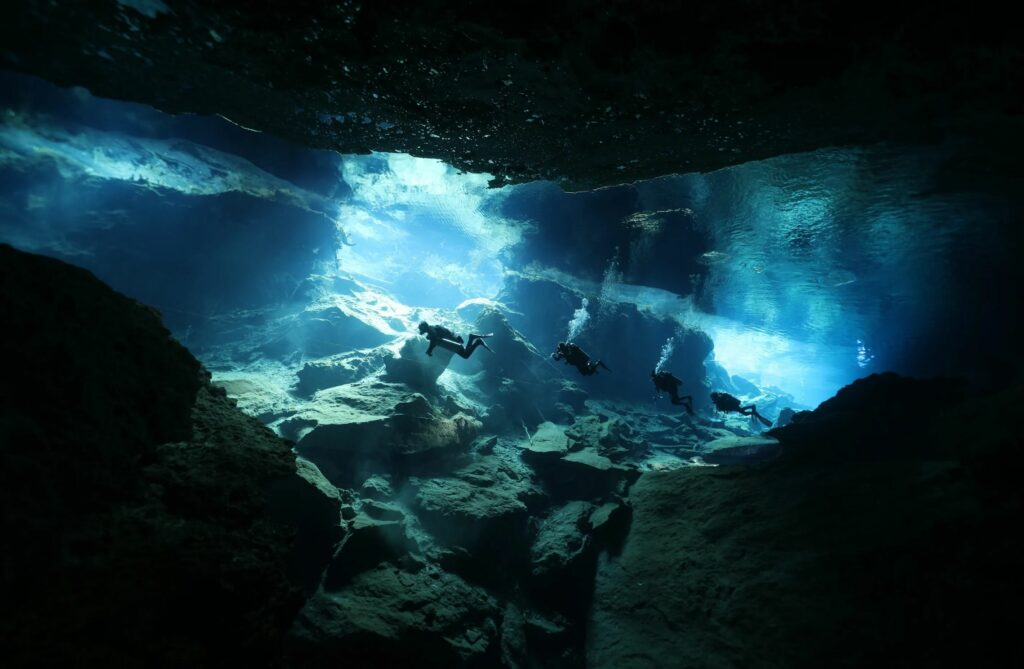
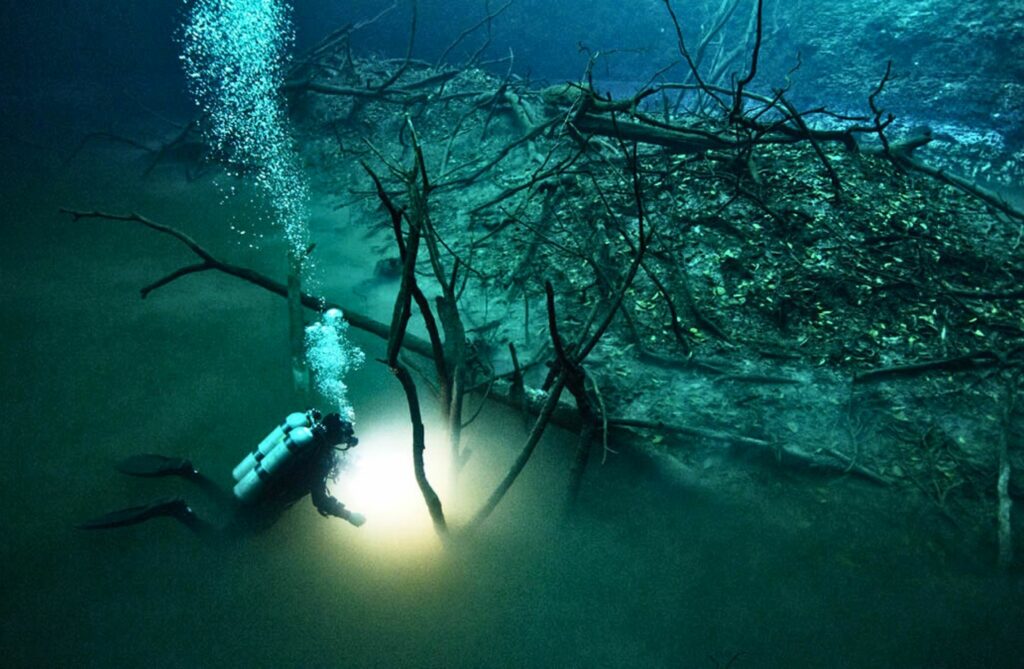
This is why advanced certifications such as Cave Diver, Technical Diver, or Trimix Diver are essential for exploring the deep zones or internal passages of cenotes.
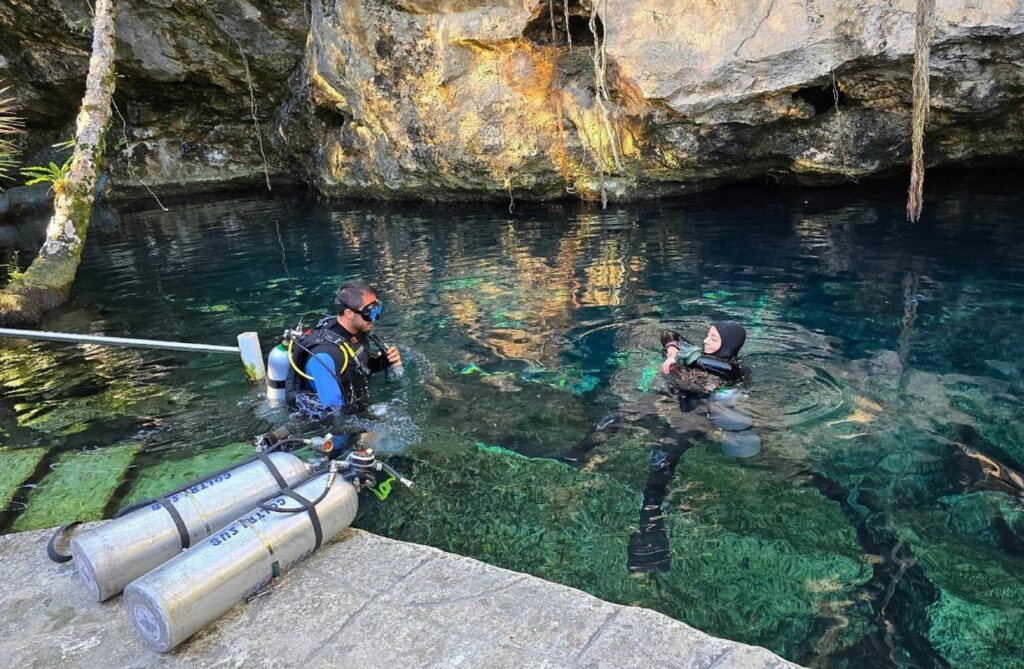
However, as soon as you obtain your Open Water certification, you can already dive in accessible cenotes such as Chac Mool, Dos Ojos, Casa Cenote, and many others.
The #1 factor that influences safety in cenote diving!
Safety in cenote diving depends on several elements, but the most important factor is always the diver themself.
Their technical skills, ability to remain calm, knowledge of the equipment, and experience in enclosed environments determine the quality and safety of the dive.
The stronger the skills, the smoother and safer the exploration becomes.